Posts


TEMPLE SOTHERINGTON – The Knights Templar at Selbourne & St Mary’s Church
February 2025
The Lost Legacy of Temple Sotherington
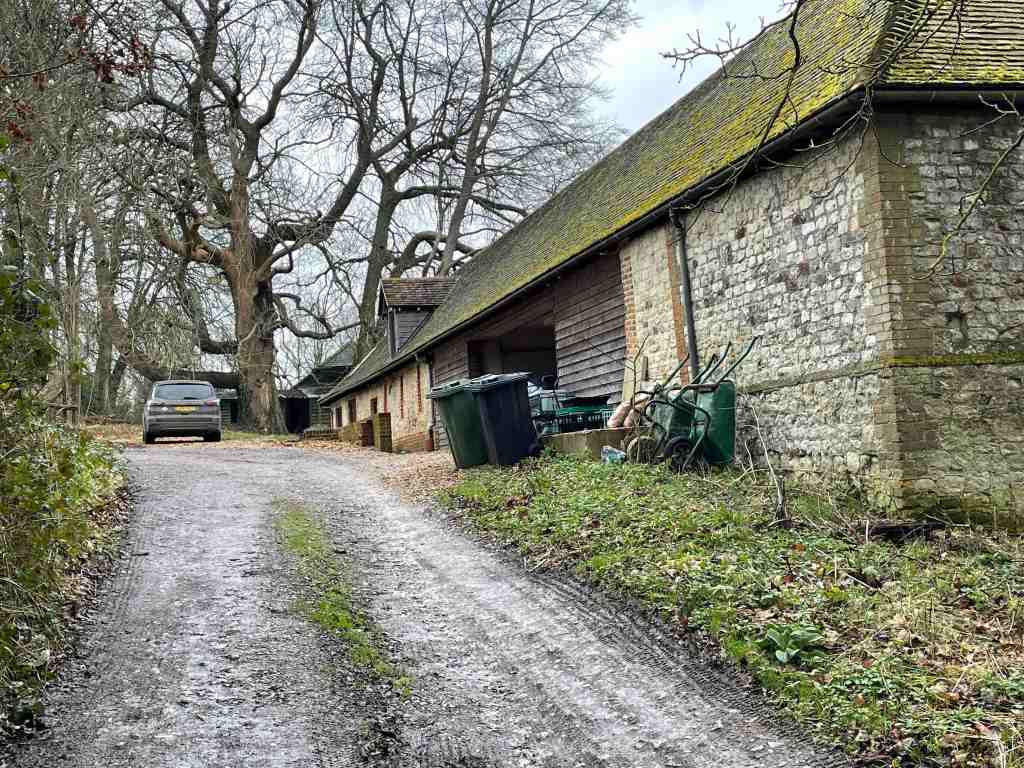
Today, little remains of Temple Sotherington beyond fragments of the old chapel, now part of a private residence. Yet, with a bit of imagination, one can trace the historical footprint of the Knights Templar within the modern landscape, which echoes the layout from centuries past. Although the Templars’ preceptory has long vanished, its presence was once firmly rooted just east of Selborne, in a place called Sotherington.
Over time, the manor known as the Temple of Sotherington became simply known as Temple. While much of its history has faded, the names linger in the local geography—Sotherington Lane, Temple Lane, and Temple Barns hint at the area’s storied past. The Templars held the manor of Sotherington as early as 1240, establishing a preceptory that served as a key part of their regional network.

Before the Norman Conquest of 1066, a church already stood on the site of what is now St. Mary’s. The Normans later rebuilt it into the structure we see today. Much of what we know about Temple Sotherington and St. Mary’s comes from Selborne’s famed naturalist, Gilbert White. According to White, the Templars once held considerable property in the area, but by his time, the preceptory had dwindled to little more than a common farmhouse. The chapel attached to it, with its thick, ancient walls and narrow windows, reflected its medieval origins—White remarked that it looked more like a dungeon than a place fit to receive guests.
Today, St. Mary’s Church still bears subtle traces of the Templars. Tomb lids, believed to be those of Templar knights, can be found within its walls, and the ornate tiled floors may also date back to their time. Additionally, in the North Chantry of the church resides a large tomb, reportedly that of Sir Adam de Gordon, a prominent figure in Selborne’s history. Sir Adam commanded under Simon de Montfort, a notable benefactor of the Templars, and was one of the chief landowners in the region.


Captured after the Battle of Evesham in 1265, Sir Adam was freed in 1268 and later became a loyal subject of King Edward I. In 1271, he generously donated plaster to the priory for the villagers’ use and granted lands to the Templars. Sir Adam was said to be of extraordinary stature—standing nearly 6 feet 6 inches tall—which aligns with the impressive size of his tomb that remains in St. Mary’s today.

Though the physical structures of Temple Sotherington have mostly disappeared, its legacy lives on in the land, the architecture, and the stories passed down through generations.
Head over to our main website www.thetemplars.co.uk here to learn more about the Templars at Sotherington & Selborne, and hit our web store here for all your Knights Templar Gifts, Replica Swords & Armour
 TheTemplars.Co.Uk