JANUARY 2026
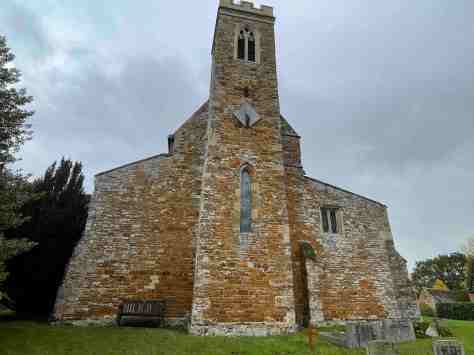
Tucked away in the rolling Rutland countryside, St Andrew’s Church, Stoke Dry may appear at first glance to be a modest rural parish church. Yet this small building holds a remarkable medieval history, linking it to the legendary Knights Templar, the Knights Hospitaller, and generations of local gentry. From the intricate stone carvings of the Norman and Gothic periods to the church’s ecclesiastical role in the medieval landscape, St Andrew’s offers a fascinating window into England’s past.
The Templar Connection: A Church Under the Knights’ Influence
In the medieval period, the advowson of St Andrew’s Church — the right to appoint the parish priest — was a significant form of influence over local religious life. At Stoke Dry, this advowson was granted to the Knights Templar, the famed military order known for their role in the Crusades and vast landholdings across Europe.
Local historical records indicate that a landowner, Gilbert de Dristoke, transferred this right to the Templars, creating a direct link between the village and one of the most famous medieval orders. While no dedicated Templar buildings remain at Stoke Dry today, their presence would have been felt through ecclesiastical administration, land management, and economic activity associated with the parish.
After the suppression of the Templars in the early 14th century, the rights to St Andrew’s, along with other Templar properties in the region, were passed to the Knights Hospitaller. The Hospitallers, another religious military order, continued to hold the advowson and manage local estates, integrating Stoke Dry into a broader network of monastic and agricultural holdings. Their stewardship ensured that the church remained a focal point of spiritual and social life in the village.
Medieval Stone Carvings: A Testament to Skill and Devotion
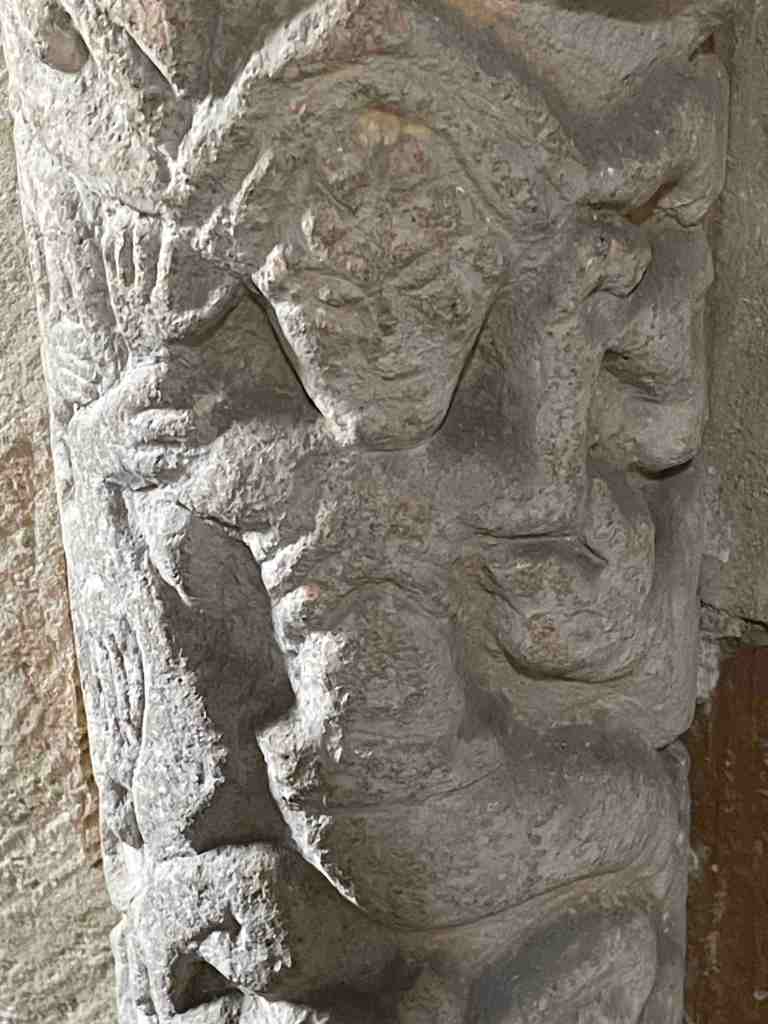
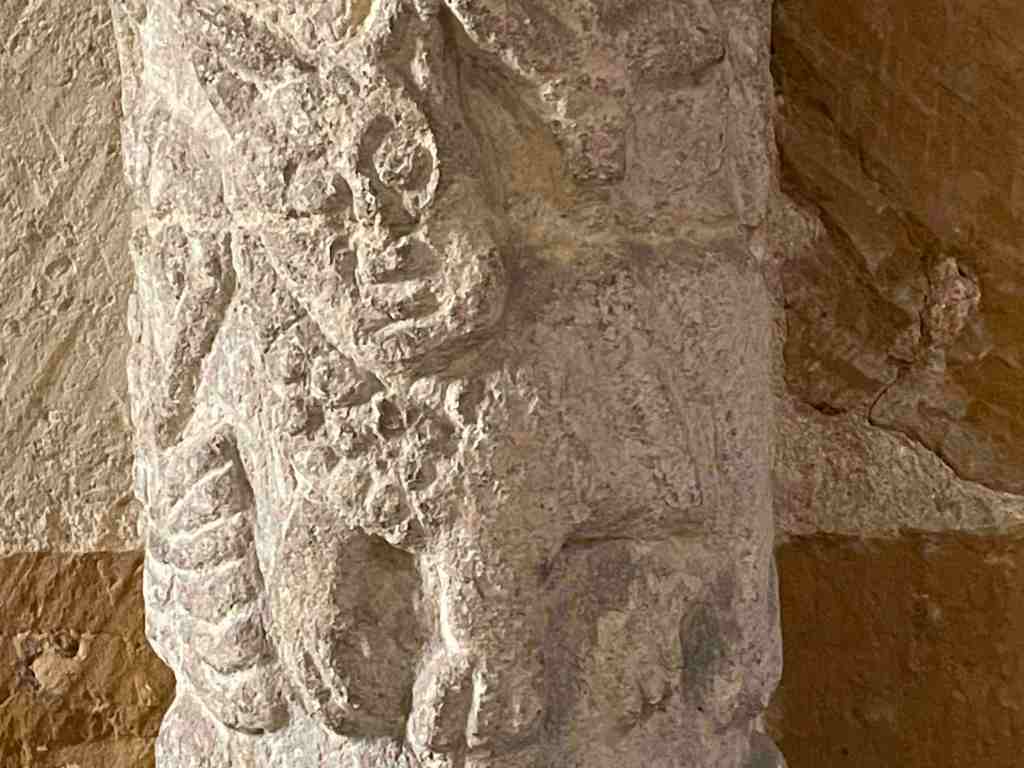
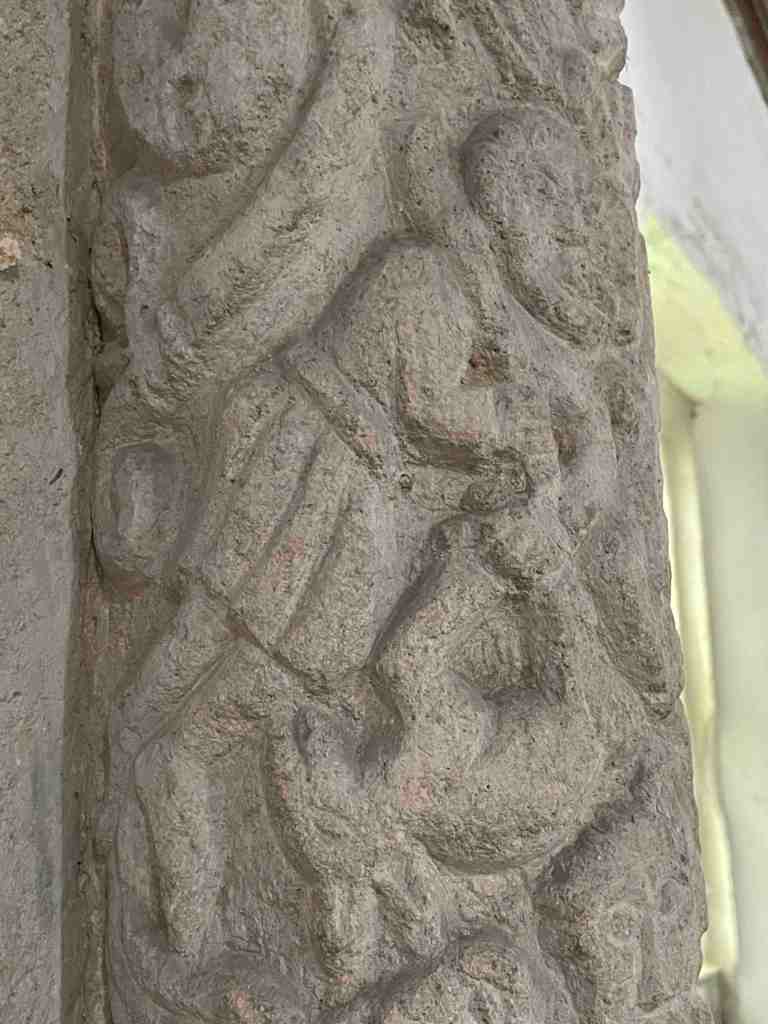
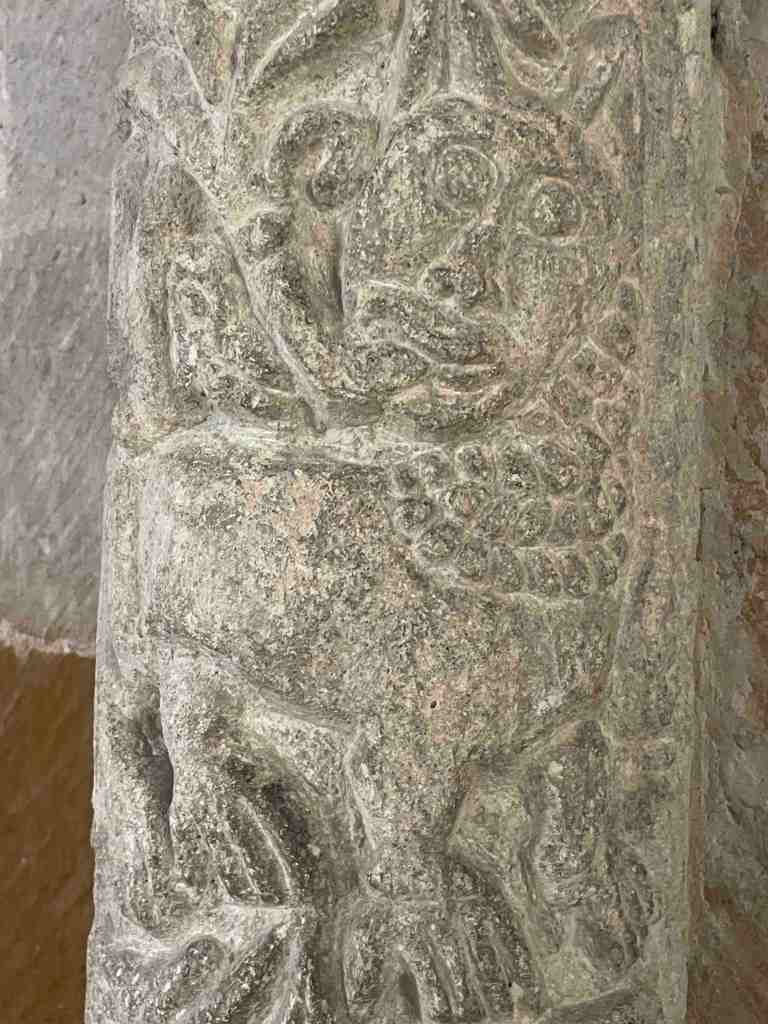
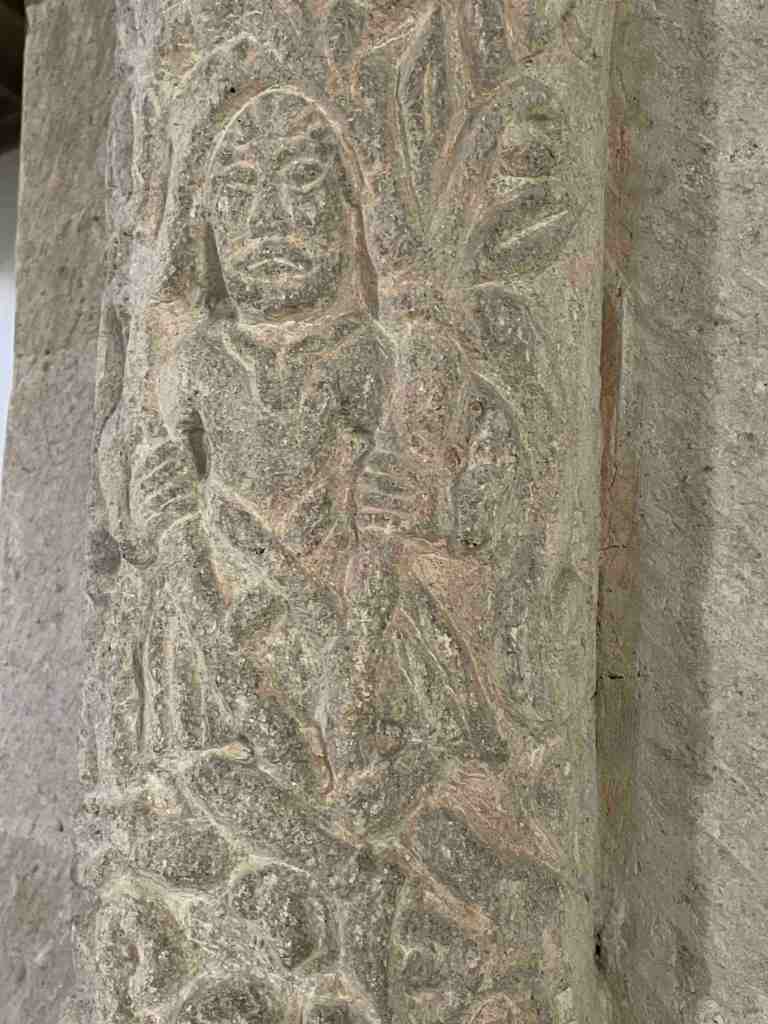
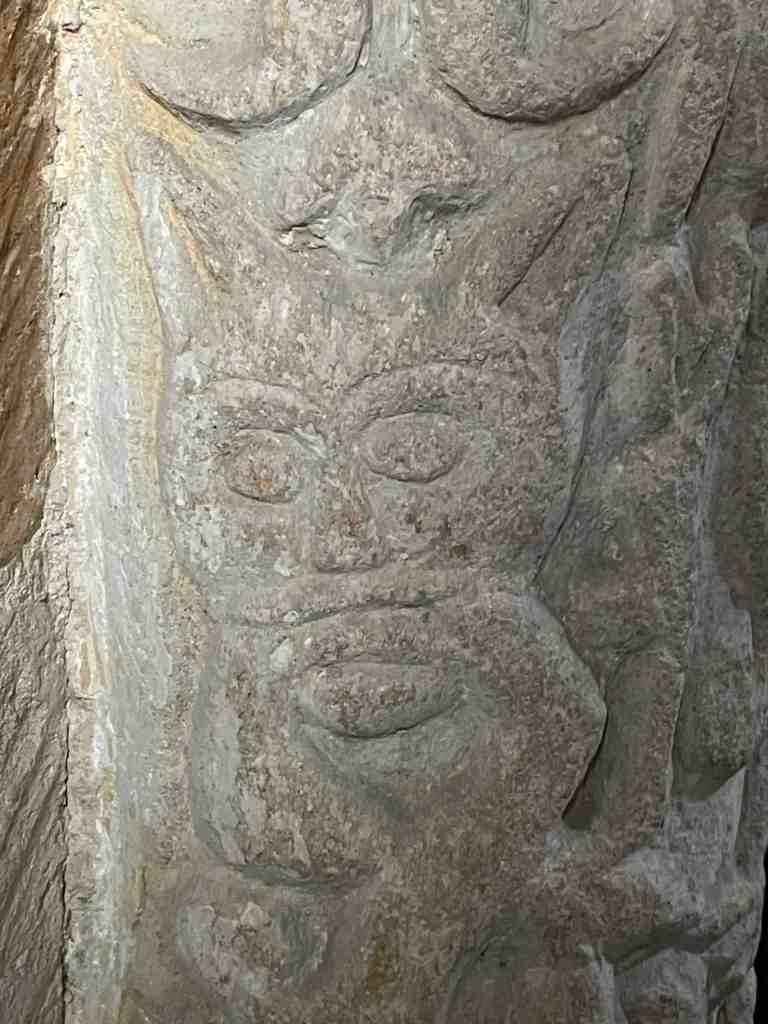
One of St Andrew’s most remarkable features is its medieval stonework, which survives from the Norman (12th century) and early Gothic periods. The church is not just a religious building but also a gallery of medieval craftsmanship.
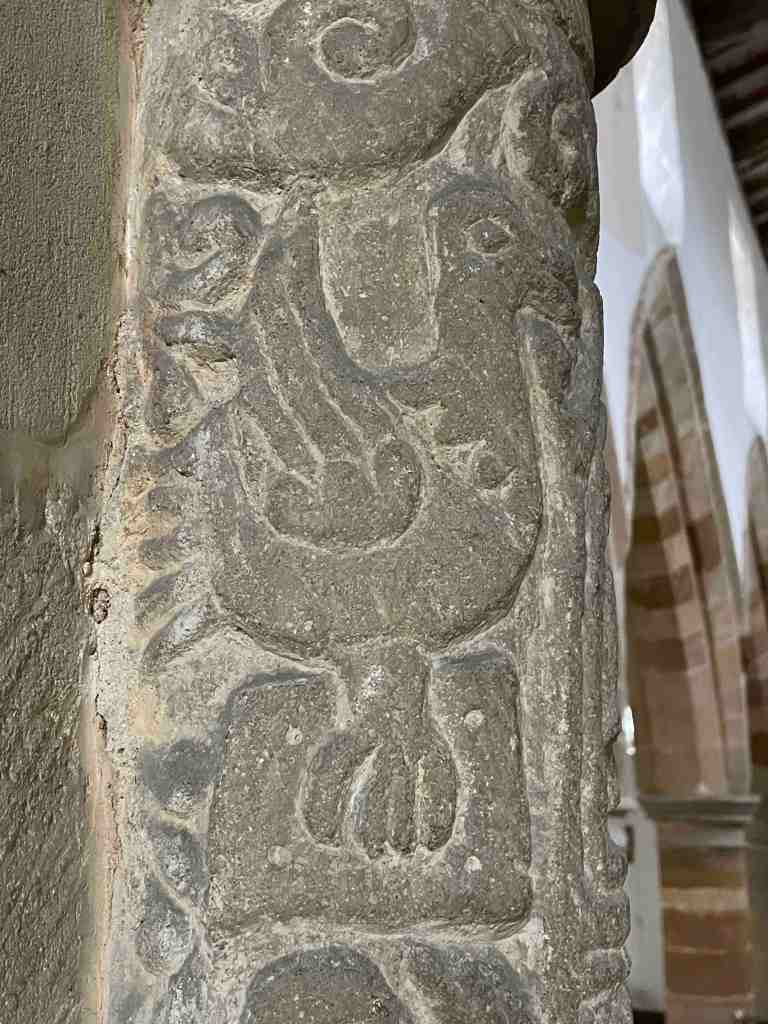
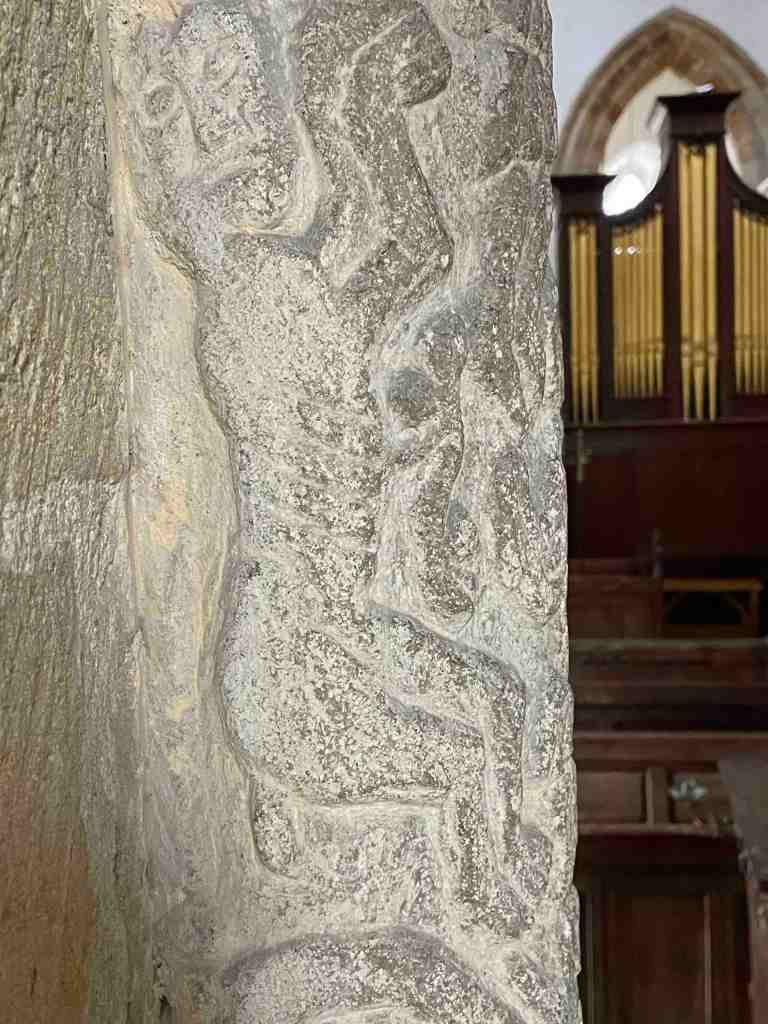
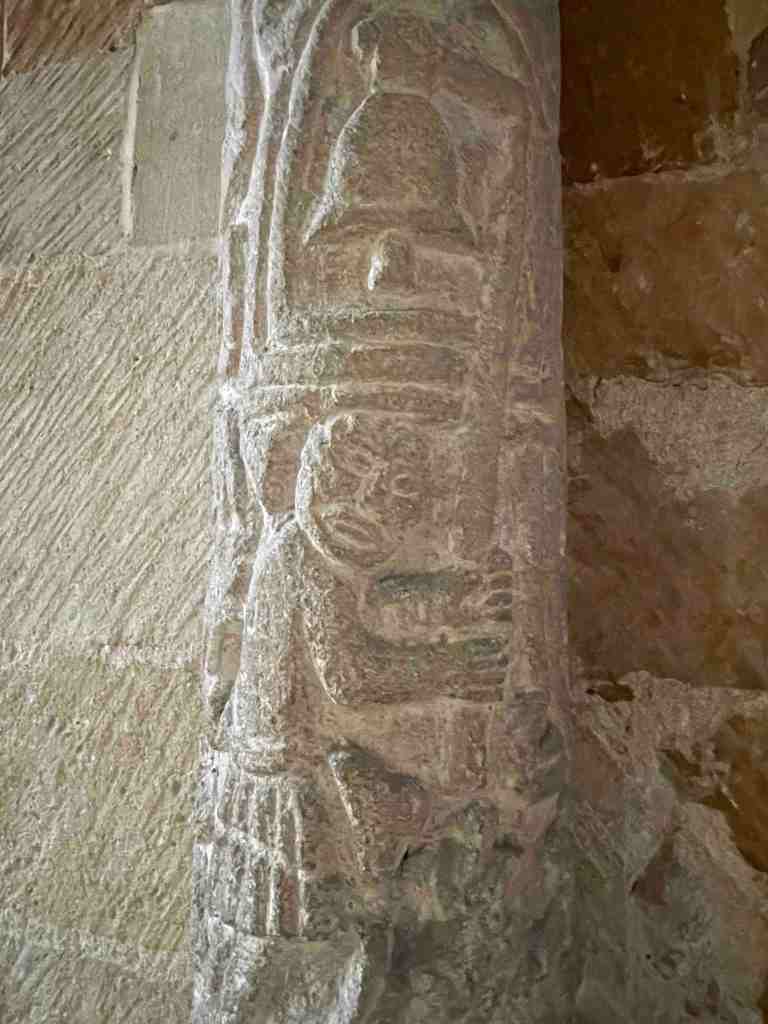
The Chancel Arch
Dating from around 1120, the Norman chancel arch is a highlight of the church’s interior. The capitals and shafts on either side are richly carved with:
- Beasts and mythical creatures, reflecting Romanesque artistic motifs.
- Intricate foliage patterns, typical of Norman stonework.
- A particularly unusual figure of a man pulling a bell rope, believed to be one of the earliest depictions of a church bell in England. This combination of symbolism and narrative sets St Andrew’s apart from many rural churches.
The South Porch
The south porch contains additional early Norman carvings, including:
- A carved tympanum above the doorway showing winged creatures flanking a wheel-like object, perhaps symbolic of divine order or the church itself.
- Surrounding beast heads and foliated decorations on the doorway, demonstrating the skill of local masons.
- Capitals and doorway shafts that reveal a continuity of craftsmanship with the chancel arch.
Nave Arcades and Gothic Capitals
Inside the nave, the arcade piers and capitals date to the late 12th or early 13th century. The circular piers support capitals carved with simplified foliate designs — an early Gothic style — offering a glimpse into the transition from Romanesque to Gothic architecture in rural England.
Other Medieval Elements
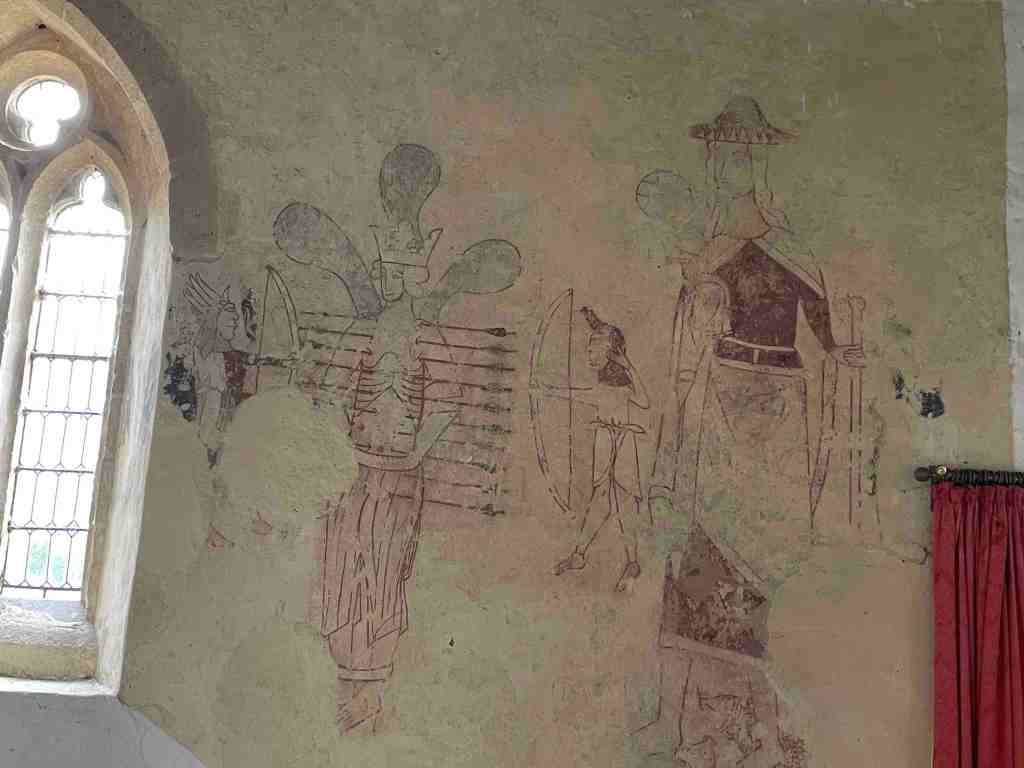
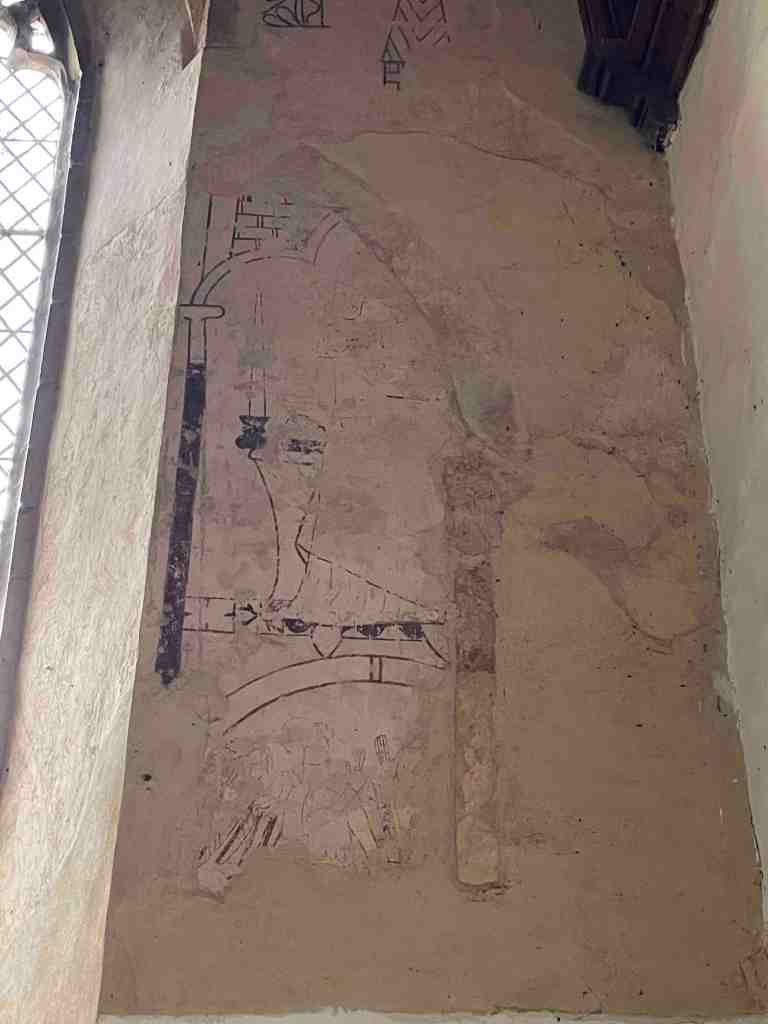
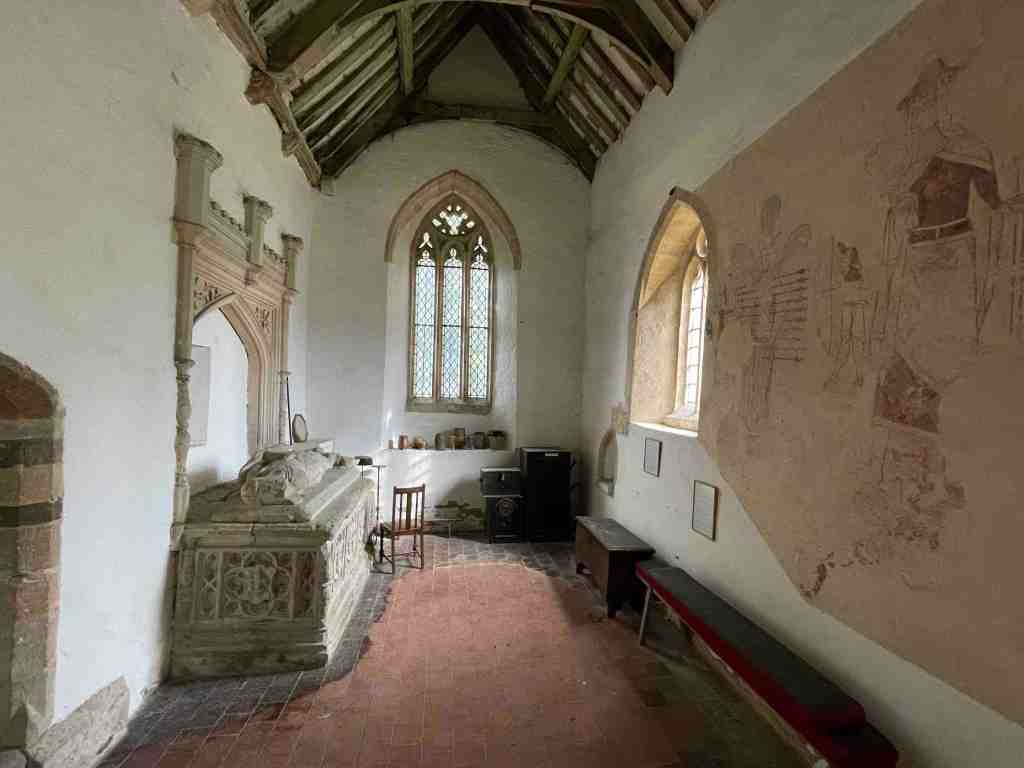
In addition to architectural carvings, the church preserves fragments of 15th-century memorials and traces of medieval wall paintings depicting saints such as St Christopher and St Edmund. These elements hint at a once richly decorated interior, providing parishioners with visual stories of faith and devotion.
The Later Tudor Influence: Digby Monuments
While the church’s medieval elements highlight ecclesiastical and artistic achievements, later Tudor monuments reflect the village’s gentry. Most notable is the alabaster effigy of Sir Everard Digby, who died in 1540.
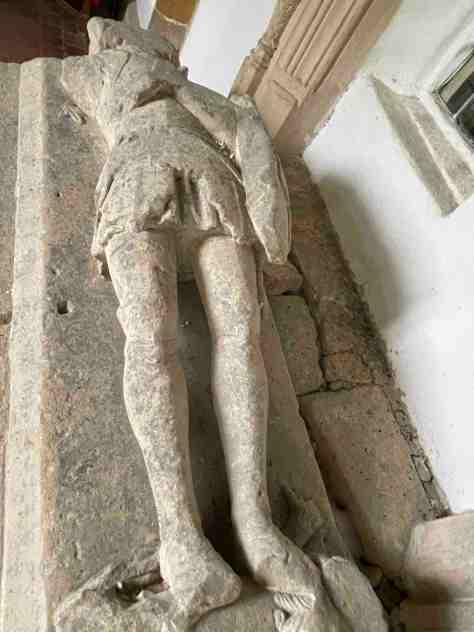
- The effigy depicts him in full armour with his feet resting on a lion, a traditional symbol of knighthood.
- The tomb chest bears the Digby family arms and Latin inscriptions commemorating his life.
- This Sir Everard Digby should not be confused with the Gunpowder Plot conspirator of the same name; he was part of the earlier Tudor lineage that shaped the village’s social landscape.
Why Stoke Dry Matters
St Andrew’s Church is a living link to centuries of English history. Its stones tell stories of:
- Knights Templar and Hospitaller patronage, connecting a small Rutland village to European crusading orders.
- Medieval craftsmanship, from intricate Norman carvings to early Gothic arcades.
- Local gentry and community life, through effigies and memorials that span the Tudor period.
Visiting Stoke Dry, one can still trace the layers of history carved in stone, preserved in alabaster, and whispered through centuries of parish life. It is a testament to the enduring legacy of faith, artistry, and social history in rural England.
Learn More about the Knights Hospitallers in the UK on our main website by clicking here
Check Out out Knights Gift Store for your replica Knights Templar, Hospitaller and Order of St Lazarus Armour, weapons clothes & gifts by clicking here
 TheTemplars.Co.Uk