February 2025


The Mysterious Presence of the Knights Templar in Worcester
The Knights Templar remain one of history’s most intriguing military orders, and their presence in Worcester has long been shrouded in mystery. Written records of the Templars in this region are scarce, suggesting that by the time of their suppression in 1307, they may have already disappeared from the area. However, the remnants of place names and historical references indicate that they were once active here.
Templar Strongholds in Feckenham Forest
Two key Templar sites have been identified within the medieval Feckenham Forest: Temple Ardley, near modern-day Feckenham, and Temple Broughton, close to Hanbury. Situated just three miles apart, it is easy to imagine that these locations were closely linked. Historical records show that both properties, known as camerae (satellite estates), were administered by the Temple Balsall Preceptory.
Although little physical evidence of Templar activity remains, documents suggest that the Templars built a ‘fair court’ at Temple Ardley. This land may have been awarded to them by William, son of Robert de Feckenham, who gifted property to the order. The site was later associated with the Templars of Beleshal (Temple Balsall) and was held by them for at least a year, as recorded in the Testa de Nevill (The Liber Feodorum or Book of Fees).
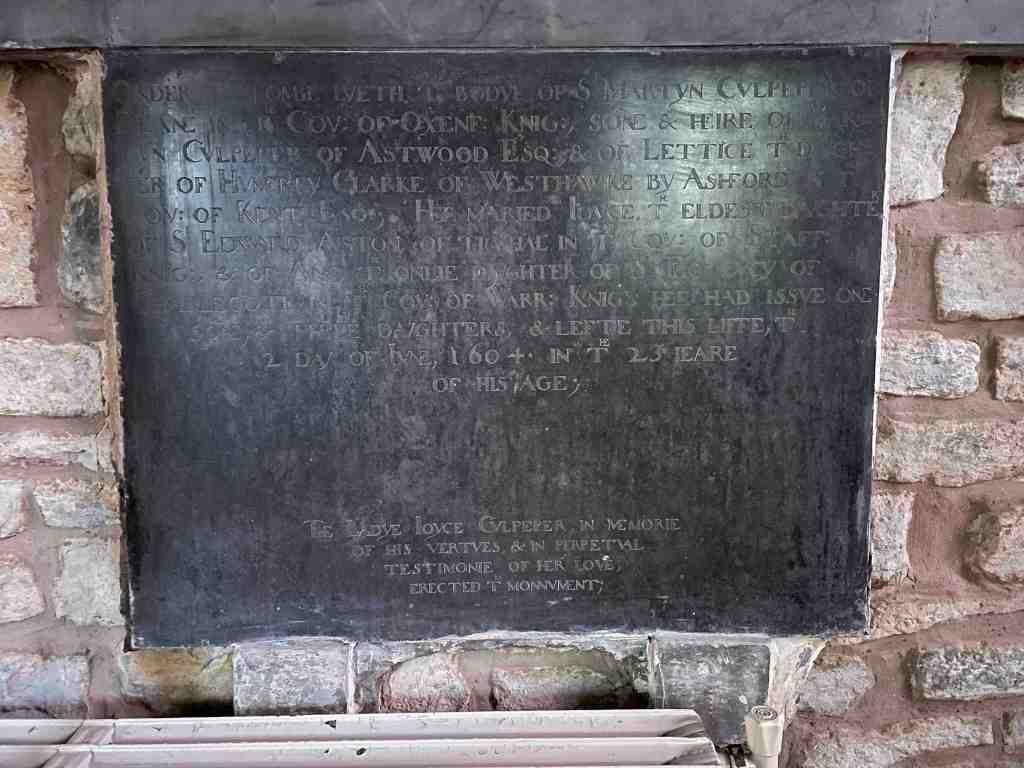
One of the most fascinating remnants of Templar activity is a massive ditch constructed in the area. Measuring 100 feet long, 20 feet wide, and 12 feet deep, this defensive structure may have been built to counteract the high levels of banditry prevalent at the time. Medieval records indicate that special forest courts existed to prosecute those who damaged woodland or hunted without permission. During the tenure of Brother Geoffrey, the King’s Almoner, the damage caused by the Templars was deemed significant enough to warrant further discussion. Remarkably, this ditch still exists today, near St. John the Baptist Church — possibly another link to the Hospitaller presence at Feckenham, and the Church of St John the Baptist is the remains of a tombstone, which now sits upon the wall of the Church. On the North Wall is a plain black inscription panel commemorating Sir Martin Culpepper who died in 1604 aged 25. The inscription was originally on a large tomb with effigies of a knight in armour and his lady, which was destroyed when the chancel was re- built in 1853 and the effigies are said to have been buried beneath the altar.

The Templars in Hanbury
Hanbury, another significant Templar stronghold, was once a forest village within Feckenham Forest. Within its parish lies Temple Broughton, which the Templars acquired as early as 1220–1221, thanks to a grant from Sir Hugh Pantulf. It appears that the Templars controlled this estate before acquiring land in Feckenham, where Henry III granted them two and a half acres in 1237.
Further evidence of their influence in the area can be found in the naming of the ancient Temple Oak, a mighty tree near Harmans Hill, believed to be over 700 years old. This tree’s name serves as a lasting testament to the Templar presence.
The Fate of the Templar Properties
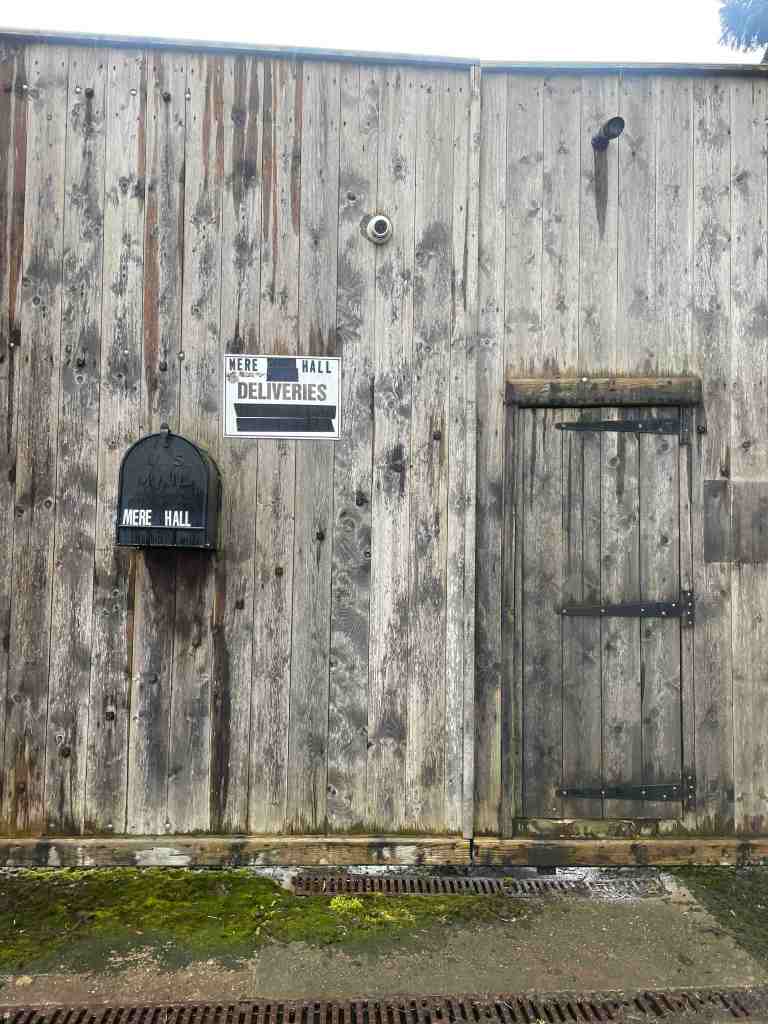
If both Temple Arden and Temple Broughton remained in use until the Templar suppression in 1307, they were likely transferred to the Knights Hospitaller. A potential clue to this transition can be found at Mere Hall, where a beam inscribed with Arabic writing and dated to 1337 has been discovered. As the house itself was built in the late 16th century, it is possible that an earlier structure once stood on the site, or that the beam was recovered locally and repurposed. This inscription raises intriguing questions about whether the beam originated from a Templar or Hospitaller property—especially given the latter’s historical aversion to the Arabic language after the Crusades.
Uncovering More of the Templar Legacy
As new discoveries emerge, we continue to learn more about the Templars’ enigmatic role in Feckenham Forest. If you have any information regarding the Templars in Feckenham or Hanbury, we would love to hear from you. Together, we can piece together the lost history of these legendary warrior monks and their presence in the heart of Worcestershire.
 TheTemplars.Co.Uk