MARCH 2026
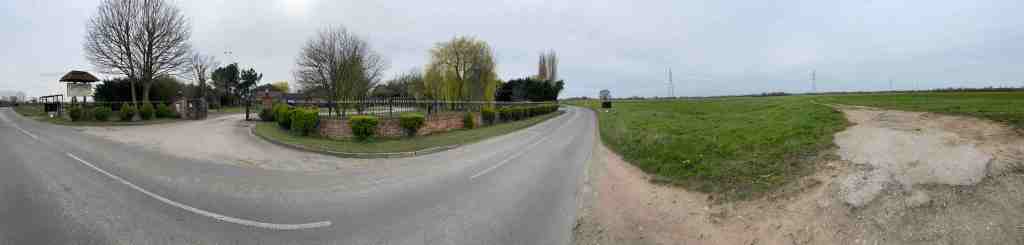
Temple Hirst stands as one of Yorkshire’s most significant surviving links to the medieval Knights Templar, the famous military-religious order founded in the aftermath of the First Crusade.
The very name of the village preserves this association: Temple denoting land once held by the Templars, and Hirstderiving from the Old English hyrst, meaning a wooded hill or copse — a fitting description for slightly raised ground in this low-lying landscape near the River Aire.
The Original Gift of the Land
The earliest clear documentary evidence dates to 1152, when Ralph and William Hastings granted the estate at Hirst to the Knights Templar.
This was no minor donation. In the 12th century, land grants to military orders were acts of major political, spiritual, and economic significance. Such gifts were often intended to support the Templars’ activities in the Holy Land, while also securing spiritual favour for the donor’s family.
The grant was subsequently confirmed around 1155 by Henry de Lacy, one of the most powerful barons in Yorkshire. This confirmation is crucial historical evidence, as it formally established the Templars’ legal claim to the estate.
By 1160, the estate had developed into a functioning preceptory — effectively a regional headquarters or estate management centre — with Robert Pirou specifically recorded as preceptor.
This is among the earliest named individuals directly associated with Temple Hirst in surviving records.
A Major Administrative Centre in Yorkshire
Temple Hirst quickly became far more than a simple manor.
Surviving documentary evidence, especially the Templars’ Inquest of 1185, shows that it had become a major administrative centre overseeing extensive holdings across Yorkshire.
These included land and income from:
- Norton
- Eggborough
- Kellington
- Fenwick
- Fairburn
- Burghwallis
- Hirst mills
- the church at Kellington
The records specifically mention two mills at Hirst, an important sign of wealth and status, as mills were profitable assets in the medieval economy.
By the 13th century, the estate had expanded further into:
- Hirst Courtney
- East, Chapel and West Haddlesey
- Osgodby
- Thorne
- Fishlake
- later Hensall, Smeaton and Burn
This scale of landholding demonstrates that Temple Hirst was one of the Templars’ most important Yorkshire centres.
What Buildings Stood Here?
One of the most fascinating pieces of evidence comes from the surviving inventories of 1308 and 1312, drawn up around the time of the suppression of the order.
These inventories allow us to reconstruct the preceptory in unusual detail.
The records list:
- a great hall or treasury
- chapel
- kitchen
- larder
- brewhouse
- bakehouse
- dovecot
- dormitory
- dairy
- granary
- forge
The chapel is specifically recorded as having an altar dedicated to the Blessed Virgin Mary.
This level of detail is exceptional, as many medieval religious sites survive only in fragmentary references. Here, the inventories provide evidence of both domestic and industrial activity, showing Temple Hirst as a self-sustaining estate centre.
Recorded People and the Templar Trials
Temple Hirst also appears in one of the most dramatic episodes in medieval European history — the downfall of the Knights Templar.
During the Templar trials of 1308–1312, testimony recorded by the Archbishop’s officials refers to a banquet held at Temple Hirst.
Two named knights, Sir Miles Stapleton and Sir Adam Everingham, were said to have recounted stories of suspicious ritual practices among the brethren, including the notorious allegation that some worshipped a calf.
Whether these accusations were true remains highly doubtful, and modern historians generally regard many such claims as politically motivated fabrications used to justify the suppression of the order.
Nevertheless, the mention of Temple Hirst in these proceedings places it directly within one of the most famous judicial persecutions of the Middle Ages.
What Evidence Survives Today?
Although the medieval preceptory itself no longer survives intact, important physical evidence remains.
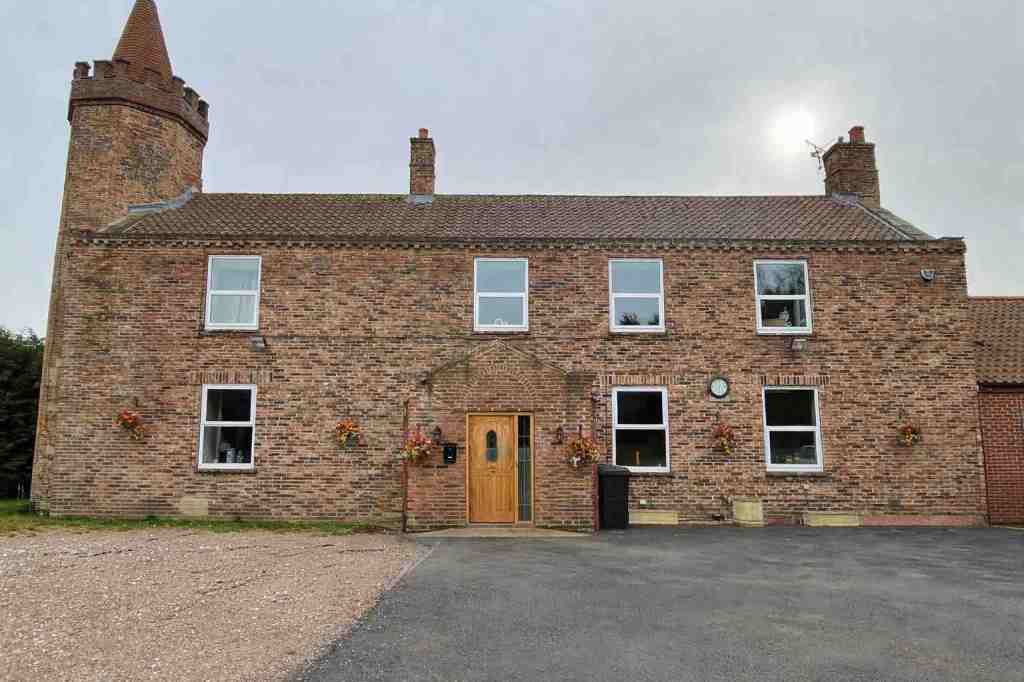
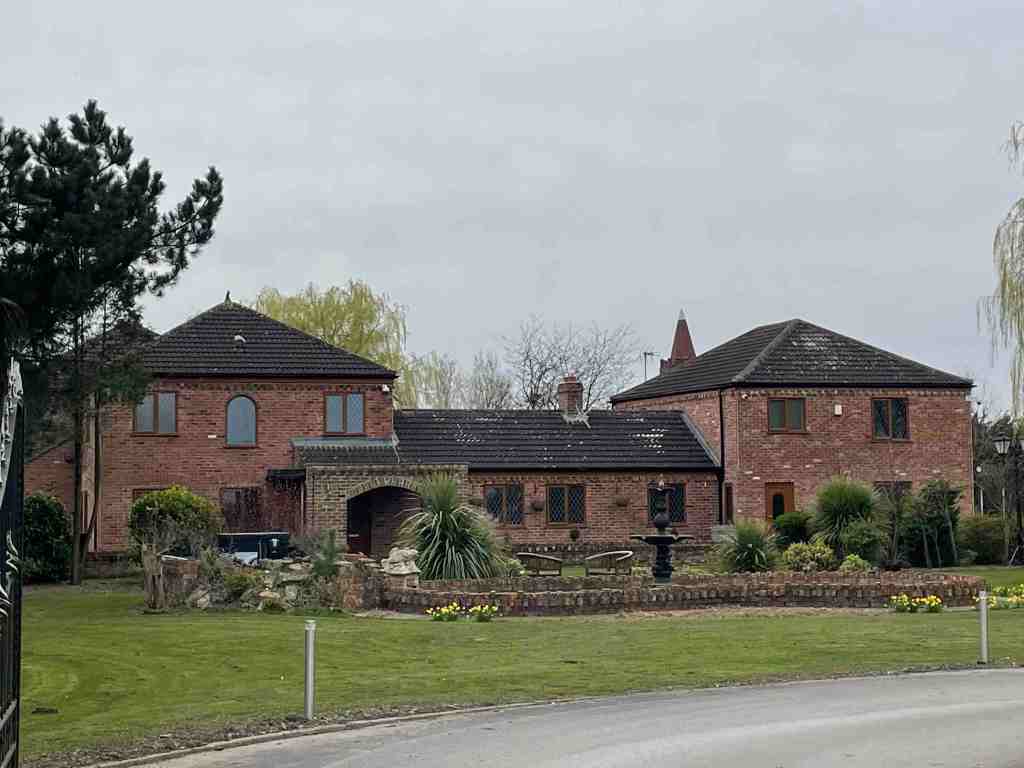
The later building known as Temple Manor incorporates fabric from the original Templar site.
Most notably, historians and architectural surveys identify a late Norman stone doorway as surviving material from the medieval preceptory.
This is perhaps the most visible surviving piece of Templar architecture at Temple Hirst today.
The site also preserves evidence of later reuse:
- a 15th–16th century stair turret
- reused medieval masonry
- a 17th-century manor house phase
- documented former fishpond earthworks
These fishponds are especially significant, as they were common features of wealthy medieval religious estates, used for food supply and status display.
In this way, Temple Hirst remains a rare place where documentary history and surviving fabric can still be read together.
Literary Legacy
Temple Hirst’s influence may even extend into literature.
It is widely believed to have inspired Sir Walter Scott’s fictional “Templestowe” in Ivanhoe, helping to shape the popular imagination of the Knights Templar in English literature.
This literary connection adds another layer to the site’s enduring historical significance.
Learn More about the Knights Hospitallers in the UK on our main website by clicking here
Check Out out Knights Gift Store for your replica Knights Templar, Hospitaller and Order of St Lazarus Armour, weapons clothes & gifts by clicking here
 TheTemplars.Co.Uk