MAY 2025

Introduction
Tucked away in the rolling landscapes of Cambridgeshire lies a lesser-known chapter of medieval history—one tied to the powerful and enigmatic Order of the Knights Hospitallers. While the Knights Templar often steal the spotlight, the Hospitallers were equally influential in shaping both religious life and rural landscapes across medieval England, including right here in Cambridgeshire.
The Hospitallers in Cambridgeshire
Cambridgeshire hosted multiple Hospitaller sites, often gifted to them by nobles seeking to support the Crusades or secure spiritual merit. These estates were more than just religious outposts; they were working farms, providing income and resources to the Order.

One of the most notable preceptories in the region was Shingay Preceptory, located near the modern village of Shingay cum Wendy. Founded in the early 12th century, it became a regional administrative centre. Archaeological and documentary evidence suggests it housed a chapel, domestic buildings, and extensive farmland. Shingay remained in Hospitaller hands until the Dissolution of the Monasteries under Henry VIII in the 16th century, when it was seized and sold off along with many other monastic lands.


The Manor of Shingay was granted to the Knights Hospitallers in 1147 by Sibyl de Rames, daughter of the Earl of Shrewsbury, along with her son-in-law, Robert, Earl of Gloucester. The Hospitallers established a commandery at Shingay, just a mile from the village of Wendy, where they also held the advowson of the Church of St Mary—a gift from the monks of Ely. The significance of the site is underscored by the fact that the General Chapter of the Order met here in 1371.
At its peak, the commandery controlled over 700 acres of land, along with two dovecotes, a watermill, and a windmill. Today, the remains of the commandery survive as a series of earthworks located just south of a mill stream and northeast of the later manor farm. The original site is still moated on all four sides, with at least three sides retaining water, offering a clear outline of its historic layout.
The Church of St Mary in Wendy has a layered history of its own. The original medieval building fell into ruin in 1734 and was replaced by a new structure, which itself deteriorated and was eventually succeeded by yet another church. The present-day All Saints Church now stands in a different location, while the site of the original church remains marked by the graveyard opposite.
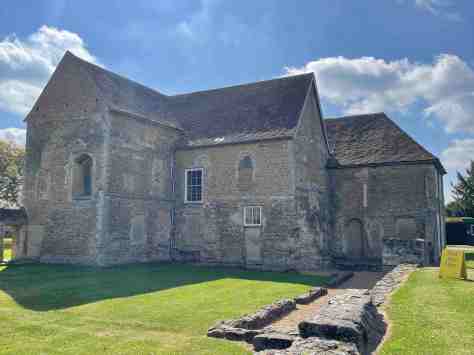
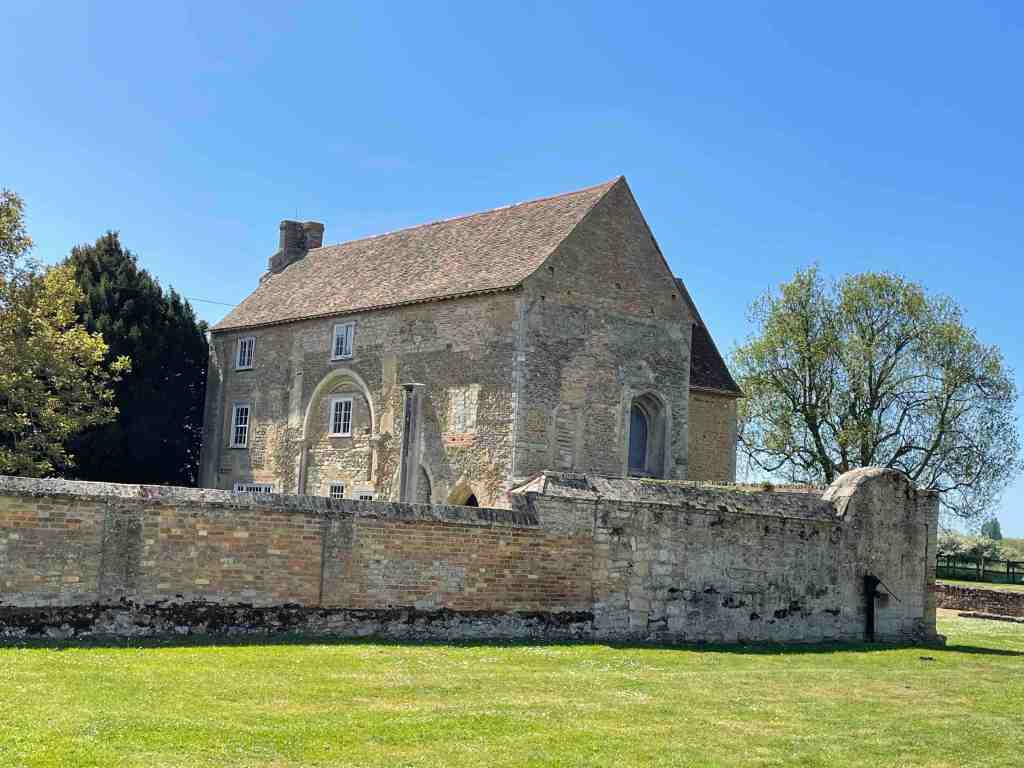
The Hospitallers also took control of Denny Abbey after the dissolution of the Knights Templars


Originally founded by Benedictine monks, the current abbey building dates back to before 1170. When the monks left Denny that year, the site was handed over to the Knights Templar, who repurposed it as a retirement home for elderly and infirm knights returning from the Crusades.
Although the detailed history of the Templar Preceptory at Denny is sparsely recorded, one surviving document from between 1229 and 1286 reveals that tithes from the nearby church at Great Witham—and from the Templar preceptory there—were used to support the aged knights living at Denny. Only one other known Templar infirmary in England existed, at Eagle in Lincolnshire, and both were once overseen by William de Forde, a respected Templar who clearly excelled as a guardian of the sick and elderly.
When the Templars were suppressed in the early 14th century, records indicate that at least fifteen knights were residing at Denny. They were imprisoned in nearby Cambridge Castle, and tragically, some did not survive to testify during the investigations. One of them, William de Marringe, died in captivity; two others possibly died before giving evidence in proceedings led by Roger de Ludlow and John de Hanville.
Today the Site is a Museuem run by English Heritage – After the Templars Dissolution the Abbey was handed to the Knights Hospitallers who showed very little interest in the location, partly due possibly to them having a similar property locally at Duxford
Another smaller site held in Cambridge, was that of Duxford.

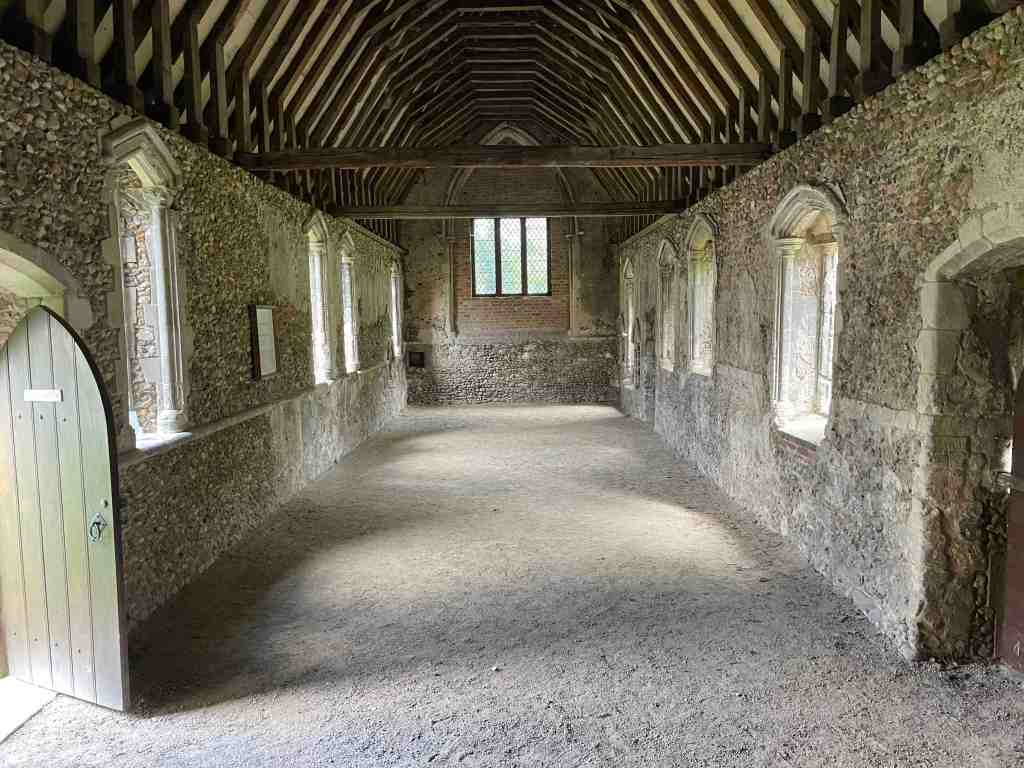
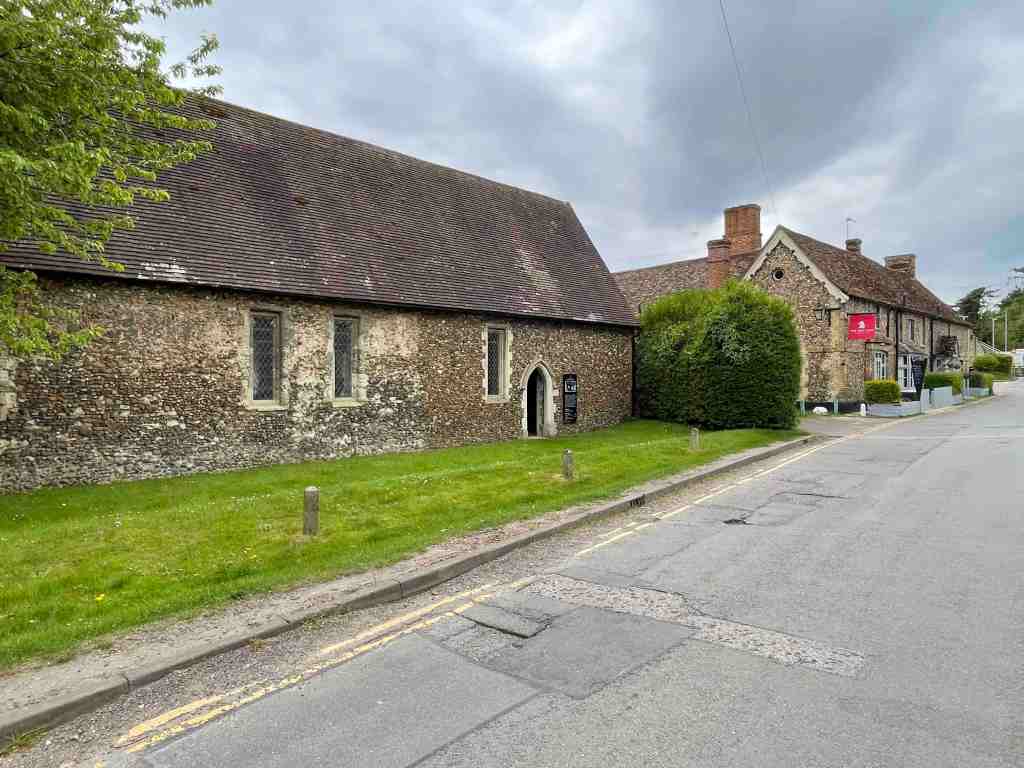
Early in the 13th Century, William de Colville founded a Hospital beside Whittlesford Bridge, split in two by the modern train station and railway. The Hospital is situated next to a small chapel, of St John the Baptist, which still exists today, managed by English Heritage, This Hospital & Chapel are to be distinguised from another Manor Granted to the Knights Templars, by different members of the de Coleville Family of 240 Acres of Land In Duxford, (or Dokesworth as it was known) Standing on the same bank, but nearer the village, Where they established Two Mills & A preceptory, close to what is today know as Temple Farm, near Temple Close which is where the Preceptory and Mills would have been located, traces of a rectangualr moat still exist today between the farm & the river
Take a look around Duxford Chapel and Hospital on our YouTube channel by clicking here
Another smaller site was located in Chippenham, where the Hospitallers held land and received rents. These scattered holdings formed a patchwork of income-generating properties, all ultimately contributing to the Order’s efforts in the Holy Land and later in Rhodes and Malta.
Legacy and Remains
Though the physical remnants are sparse—many sites were repurposed or lost over time—the influence of the Hospitallers lingers in place names, parish boundaries, and local legends. Shingay’s rural isolation today belies its past importance, but its medieval history still resonates with those who explore Cambridgeshire’s hidden corners.
The Order of St John survives today as a charitable organisation, best known for its modern-day offshoot: the St John Ambulance. It’s a remarkable link between medieval charity and modern healthcare.
Visiting the Past
If you’re interested in tracing the footsteps of the Hospitallers in Cambridgeshire, start with a visit to the site of Shingay Preceptory (note: it’s on private land, so please check access beforehand). Then explore the local churches, many of which have connections to monastic orders, or visit the Museum of Cambridge for broader historical context.
Conclusion
The story of the Knights Hospitallers in Cambridgeshire is a reminder that global history often finds its roots in local soil. Through their landholdings and religious duties, the Hospitallers left an enduring mark on the county—one that deserves recognition alongside the better-known Templar myths.
Learn More about the Knights Hospitallers in the UK on our main website by clicking here
Check Out out Knights Gift Store for your replica Knights Templar, Hospitaller and Order of St Lazarus Armour, weapons clothes & gifts by clicking here
 TheTemplars.Co.Uk