SEPTEMBER 2025

A Sacred Outpost on Bodmin Moor
Amidst the windswept wilds of Bodmin Moor lies the tiny and isolated hamlet of Temple—a place whose name, landscape, and history are forever tied to the presence of the Knights Templar in medieval Cornwall.
This remote settlement, though small, played a significant role in the Templars’ operations in the far southwest of Britain. Along with Trebeigh Manor near St Ive, Temple formed part of the Templar Preceptory of Trebeigh, a regional estate that combined religious function with land management and economic activity.
Origins: Land at Fawimore
The story of Temple begins with a land grant—recorded in the Templar estate survey of 1185—at a place called Fawimore, located on the high moorland north-east of Bodmin, watered by the River Fowey. The Latin entry reads:
“In Cornubia. Apud Fawimore. Una terra que reddit dimidiam marcam.”
(In Cornwall, at Fawimore. A piece of land that returns half a mark in rent.)
This half-mark (equivalent to 6 shillings and 8 pence) marked the Templars’ earliest documented foothold on Bodmin Moor. It is likely this estate formed the core of what became the hamlet of Temple and its original chapel and hospice.
Temple: Templar Hospice and Chapel
By around 1120, the Templars had established a chapel and hospice at Temple to serve two essential purposes:
- Spiritual support for the Order and for travellers
- Hospitality and protection for pilgrims, traders, and travellers crossing the dangerous moor
Temple lay on a key overland route from Ireland and Wales to southern ports like Fowey, where pilgrims continued by sea to the Holy Land or to St Michael’s Mount. The Templars likely offered refuge to these travellers in accordance with their sacred mission to protect pilgrims.
The Church of St Catherine: Then and Now
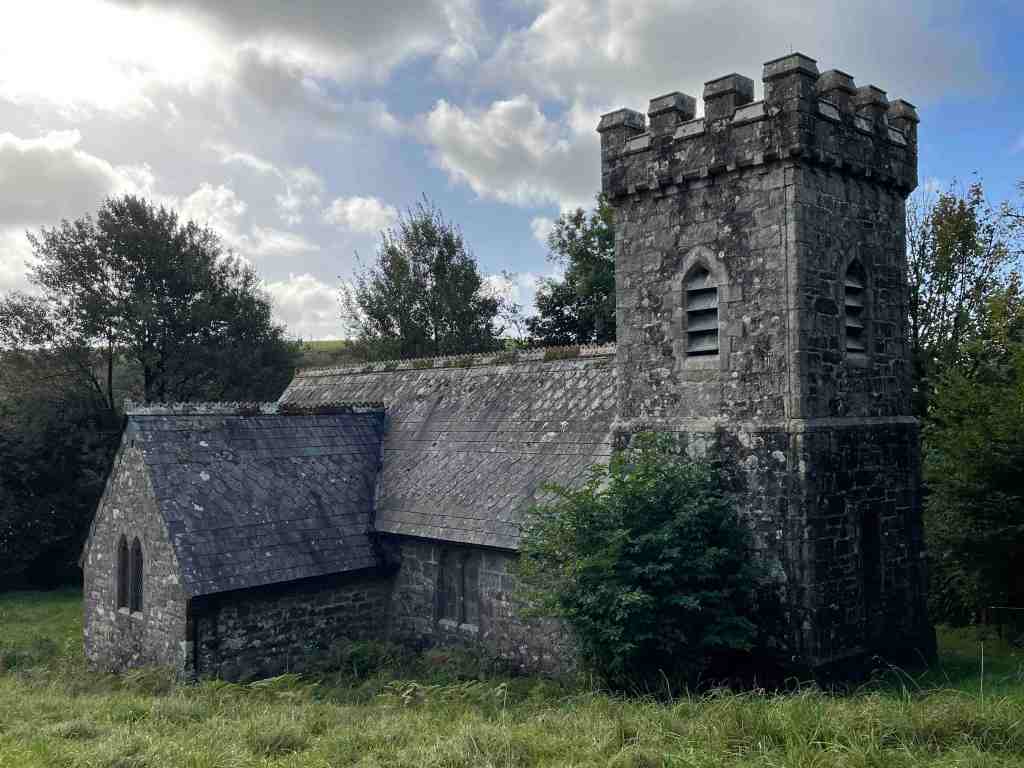
The current Church of St Catherine stands on the original site of the Templar chapel. Though it fell into ruin by the 19th century, it was restored in 1882–83 by renowned Cornish architect Silvanus Trevail. His plans followed the original footprint as closely as possible, using existing medieval elements such as:

- The tower arch
- Original foundations
- Various stone fragments, now housed in a small outbuilding beside the church
Today, the church remains off-grid, without electricity, and holds only a few services each year—retaining its aura of isolation and medieval character.
Templar Symbols and Surviving Features
Despite centuries of decay, signs of the Templar presence are still clearly visible at Temple:

- A red cross pattée (Templar cross) dominates the east window
- A small north-facing window in the tower contains a carving of a mounted Knight Templar
- Stone crosses and slabs are scattered in the churchyard and walls; Arthur Langdon, writing in 1896, recorded eight stone crosses, including two cross-slabs, some of which were later incorporated into nearby outbuildings
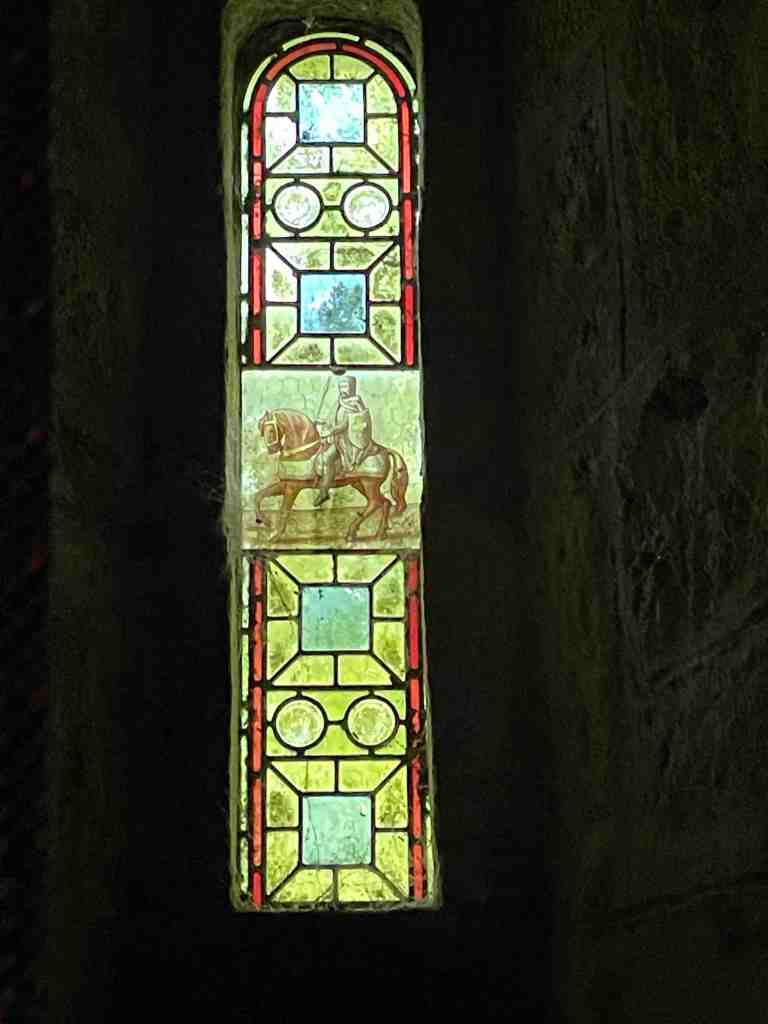
These features offer a direct, physical link to the Order’s presence in this remote part of Cornwall.
Life and Livelihood on Temple Moor
The Templars controlled much of what is now Bodmin Moor, known in their time as Temple Moor. A 19th-century guide described it as:
“A desert heath… a howling wilderness… with the hamlet of Temple at its heart.”
Despite the harsh landscape, the Templars extracted value from their land through:
- Sheep farming
- Fisheries
- Toll income from travellers and pilgrims
- Later, possibly tin mining, which was carried out on the moors and may have made Temple’s preceptory uniqueamong Templar sites, if not particularly profitable
Historical notes, such as those by George F. Tull, suggest that a Templar hospice stood here specifically to support those crossing the treacherous moor.
The Temple Preceptory: Not Just a Chapel
Though Temple may appear today as a quiet backwater, in the medieval period it was a node in a larger network. The main manor house may have stood just north of the current church, possibly where modern farms and houses now lie. It is also speculated that Temple served as a training centre for Cornish knights who were joining the Order—a practical and spiritual outpost preparing warriors for the journey east.
Together with Trebeigh Manor and other scattered holdings, Temple formed part of a structured and disciplined estate, whose purpose was both economic and ecclesiastical, local and international.
Visiting Temple Today
Modern visitors to Temple will find a hauntingly quiet place. The church remains largely untouched by modern infrastructure—no electricity, no bustling parish life, just stone, moor, and memory.
Yet for those who look closely, the signs of the Templars’ long-vanished world are still here—etched in stone, held in the landscape, and alive in the stories passed down over centuries.
Learn More about the Knights Hospitallers in the UK on our main website by clicking here
Check Out out Knights Gift Store for your replica Knights Templar, Hospitaller and Order of St Lazarus Armour, weapons clothes & gifts by clicking here
 TheTemplars.Co.Uk