April 2025
Tucked away in the modern landscape of Beaumont Leys, just northwest of Leicester, lies the remarkable story of a once-thriving medieval manor run by one of the most powerful military orders of the Middle Ages: the Knights Hospitallers.
The Knights Hospitallers, formally known as the Order of the Hospital of Saint John of Jerusalem, were originally founded to care for sick and poor pilgrims in the Holy Land. Over time, they became a formidable military and landowning force across Europe, and England was no exception. In the mid-13th century, Simon de Montfort, the 6th Earl of Leicester, granted the manor of Beaumont Leys to the order. They would hold the estate for more than two centuries, from around 1240 until 1482.
But Beaumont Leys wasn’t always in their hands. Before the Hospitallers, the land was owned by the Earls of Leicester and had even briefly passed to the Knights Templars—another famed military order—before being reclaimed and transferred again.
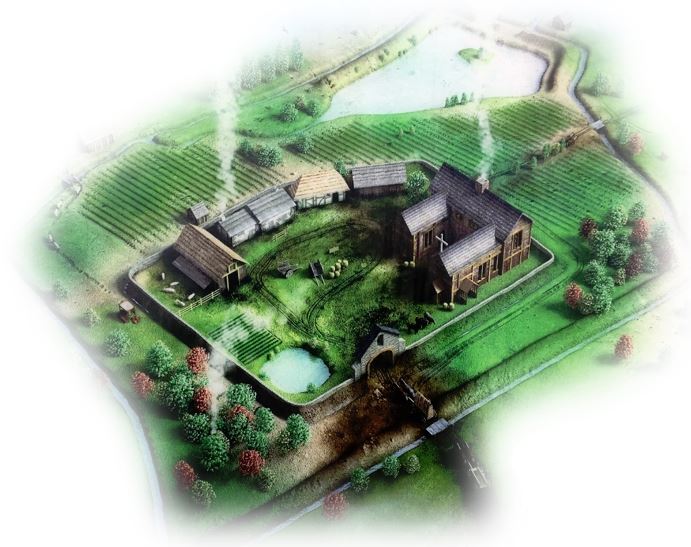
The manor itself was no mere outpost. By 1338, a survey recorded Beaumont Leys as a dependent manor of the Hospitallers’ main local base: the preceptory at Old Dalby, located about 11 miles away. The estate covered approximately 960 acres in total, including 220 acres of arable farmland, as well as meadows, pasture, and an apple orchard. It was likely used as a sheep farm—an enterprise central to the medieval English economy. A resident bailiff oversaw operations, supported by a wood keeper—an official whose presence suggests that the woodland was both extensive and valuable enough to require active management.
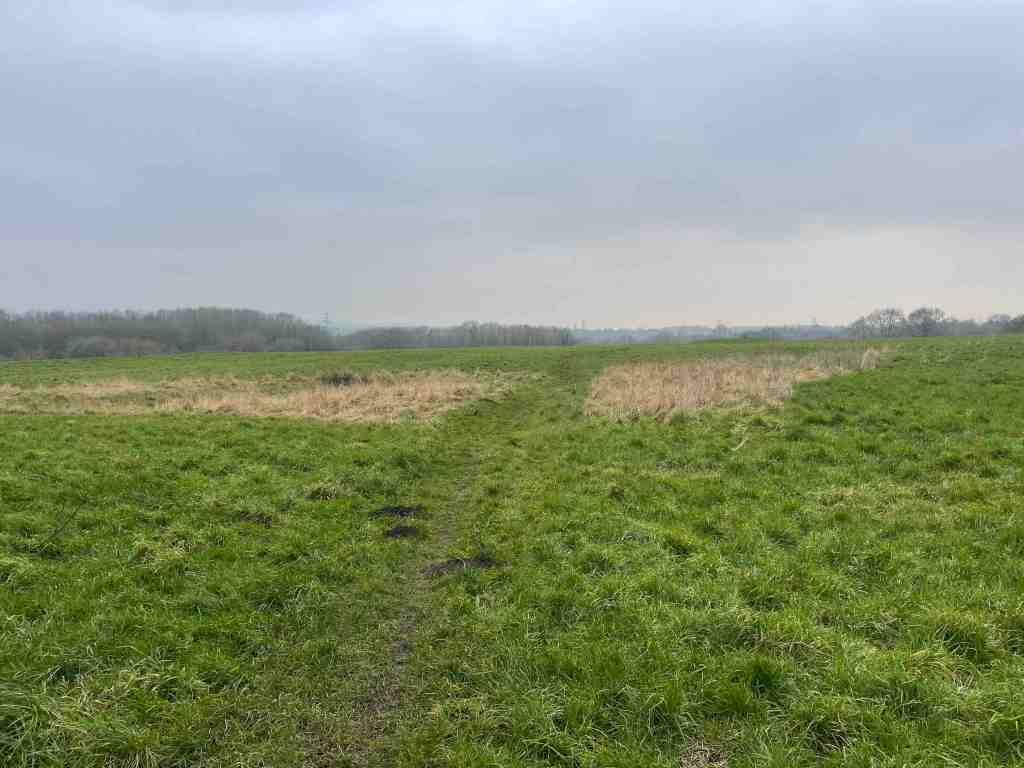
Today, traces of this medieval manor still lie beneath the soil. Archaeological digs have revealed a wealth of information about the site. Earthworks—raised ridges and ditches that once marked boundaries or defensive features—have been extensively studied. Excavations have uncovered the remains of a large medieval building, believed to be the manor house itself. Its stone foundations reveal a structure around 8 meters wide and up to 20 meters long. The house was timber-framed, set on a shallow stone plinth, and topped with a slate roof decorated with expensive green-glazed ridge tiles—a status symbol of the time. Inside, a central hearth points to a large open hall, the beating heart of medieval domestic life, where meals were cooked, and community life unfolded.
There’s also evidence of a fishpond—an important feature in medieval estates, particularly those managed by religious orders. Fish, especially freshwater varieties like carp, were a staple of monastic and knightly diets, especially during fasting periods when meat was prohibited.
Despite its active use, the manor’s time under the Hospitallers came to an end in 1482. In a strategic move, the order exchanged Beaumont Leys with King Edward IV for the more profitable rectory of St Botolph in Boston, Lincolnshire. The land passed from the hands of the knights, but the legacy of their presence endures.
Today, while little remains above ground, the hidden history of Beaumont Leys continues to be pieced together by archaeologists and historians alike. Each discovery adds another layer to our understanding of medieval life and the role of powerful institutions like the Knights Hospitallers in shaping the landscape of England.
So next time you find yourself walking through Beaumont Leys, take a moment to imagine the bustling manor that once stood there—alive with livestock, orchard blooms, and the quiet discipline of monastic knights tending to the land.
To learn more about the Knights Templar, Knights Hospitaller & The Knights of Lazarus Head over to our main website here
Check out our Knights Gift Store also, for your Knight Replica Armour, Swords and Gifts check out our store here
 TheTemplars.Co.Uk