Roger Mowbray: Crusader, Templar Benefactor, and the Mystery of the Knight’s Heart Tomb
Who was Roger Mowbray & What Was His Influence to the Knights Templar, Hospitallers and Knights of Lazarus?
Roger Mowbray, born in 1118, was a nobleman deeply connected to the Knights Templar, shaped by his own experiences as a crusader. The son of Nigel d’Aubigny, he adopted the surname Mowbray at the age of nine. By eighteen, he was already proving his prowess on the battlefield, fighting for the English against the Scots at the Battle of the Standard.
Mowbray later supported King Stephen at the Battle of Lincoln, where he was captured and forced to cede some of his lands. This loss may have fueled his decision to join the Second Crusade, seeking both redemption and military honor in the Holy Land.
Upon his return, Mowbray attempted to reclaim his lost estates, but his rebellion against Henry II ended in failure, costing him even more land. Despite this setback, his commitment to the Crusader cause remained unwavering. At sixty years old, he set off once more for the Holy Land, where he would play a role in one of the most catastrophic defeats of the Crusaders—the Battle of Hattin in 1187.
Capture and Final Days in the Holy Land
At Hattin, Mowbray was taken prisoner by the Saracens, but due to his long-standing support for the military orders, a ransom was arranged for his release. Unfortunately, he did not live long after regaining his freedom. While some sources claim he died in Palestine, possibly being buried at Sures, others suggest he returned to England for several years before being laid to rest at Byland Abbey in Yorkshire.
A Devoted Benefactor of the Monastic Orders
Mowbray’s deep religious devotion is evident in the generous gifts he bestowed upon various religious institutions. Among his many contributions, he supported:
- St. Mary’s Abbey, York
- Kenilworth Priory
- Several Templar estates, including Brimham (Yorkshire), Hampton-in-Arden (Warwickshire), Temple Balsall, Bagby, Thorp, and Weedley (York), Althorpe, Burnham, Beltoft, and Keadby (Lincolnshire)
- He was also a principal patron of the Order of the Knights of Lazarus (the Leper Knights), gifting them land at Burton Lazars, near Melton Mowbray, in 1157—establishing their main preceptory in England.
The Mystery of the Knight’s Heart Tomb
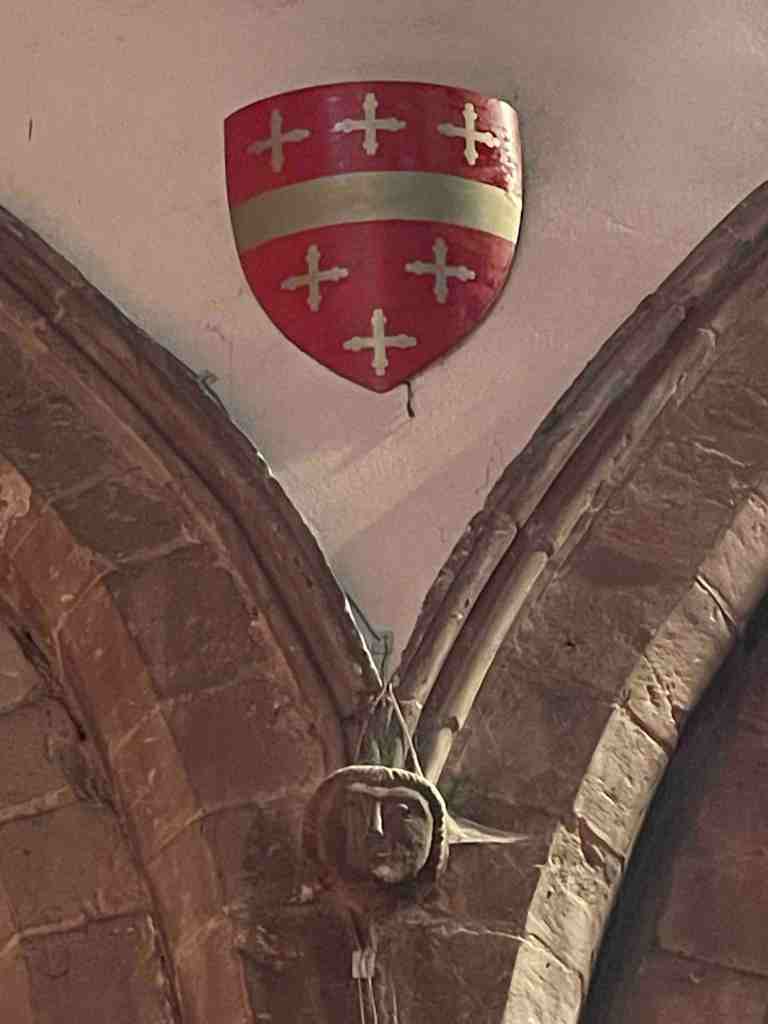
Mowbray’s final resting place remains a subject of historical debate. While Byland Abbey holds an effigy believed to be in his honor, another intriguing possibility lies at the Church of St. Mary & St. Bartholomew in Hampton-in-Arden.
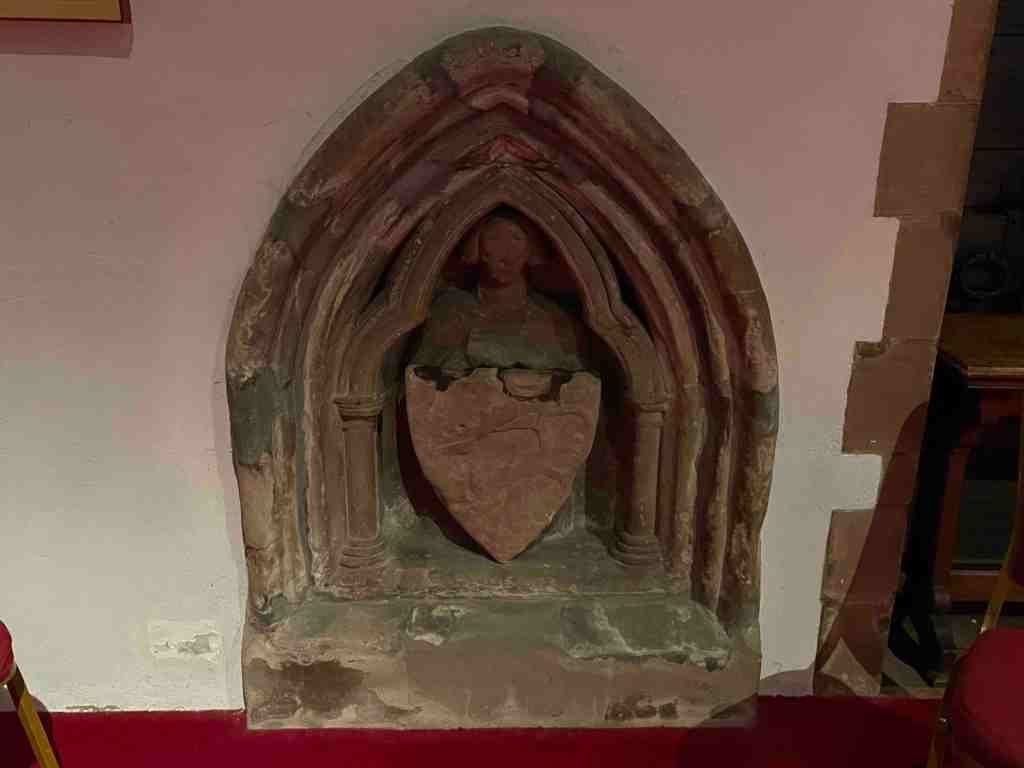
This church contains a mysterious “Knight’s Heart” tomb, said to hold the heart of a Crusader—possibly a Templar—buried within its walls. Could this be Roger Mowbray’s heart, brought back from the Holy Land to Hampton-in-Arden, one of the very estates he gifted to the Templars?
Some clues suggest this might be the case:
- The shield on the knight’s tomb appears to bear two leopards, potentially referencing the arms of Normandy, Roger Mowbray’s ancestral homeland.
- Hampton-in-Arden was a Templar estate, close to both Temple Balsall and Barston, lands gifted to the Templars and the Knights Hospitallers.
While we may never know the full truth, the Knight’s Heart tomb remains a fascinating historical site, worth visiting to glimpse a piece of Crusader legend and Templar history.
Roger Mowbray’s Legacy
Whether his body rests in Palestine or England, Roger Mowbray’s impact on medieval history is undeniable. As a warrior, benefactor, and Crusader, he left an enduring legacy—one that continues to intrigue historians and visitors alike. His life, filled with devotion, conflict, and adventure, embodies the spirit of the Crusades and the Templar age.
Learn more about Roger Mowbray, and the Knights Templar, along with our Knights Templar Gift store on our website by clicking here
 TheTemplars.Co.Uk