Posts



TEMPLE LAUGHERNE – Worcester Knights Templar – Preceptory or Manor House?
February 2025
Little is known about the Knights Templar’s presence at Temple Laugherne in Worcester. However, the “Temple” prefix in its name strongly suggests that the Templars once had a foothold here.
Blink, and you might miss it—Temple Laugherne is a small hamlet in Worcestershire, easy to overlook if you’re passing through too quickly. Despite its modest size today, it has deep historical roots. Recorded in the Domesday Book of 1086, Temple Laugherne was part of the Oswaldslow Hundred and listed under two landowners. With just three households, it ranked among the smallest 20% of settlements documented at the time.
Though little remains to tell the full story of the Templars here, its name serves as a lasting clue to their past influence in the area.

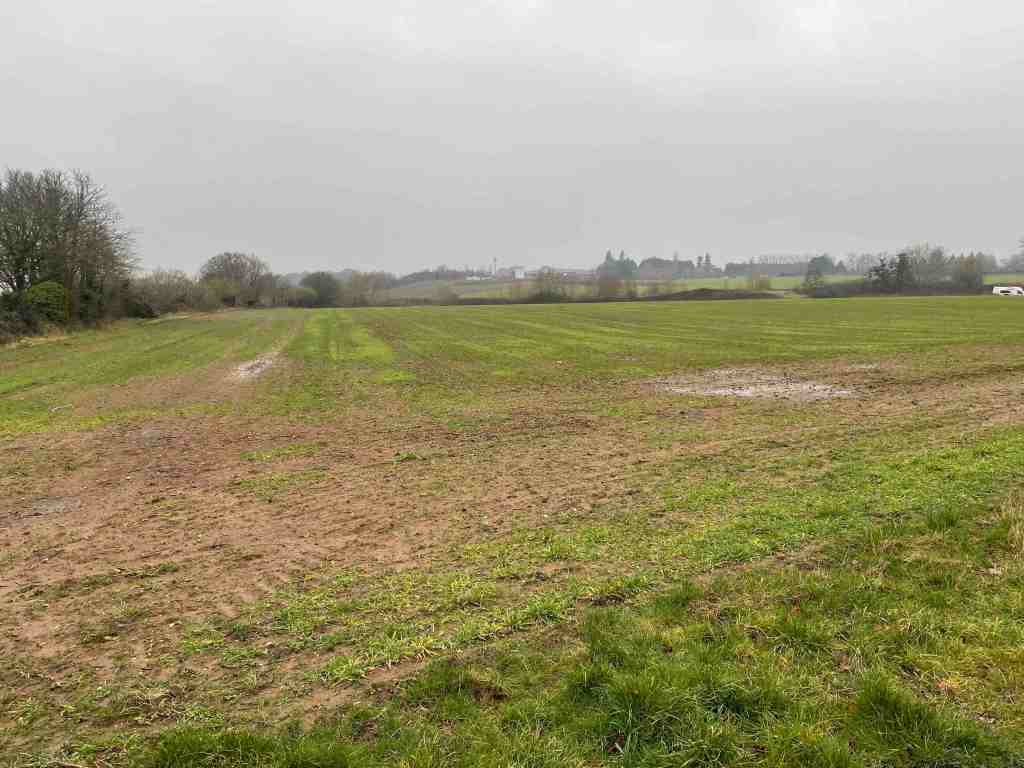
Today, the site of Temple Laugherne has been replaced by a modern housing estate. However, an archaeological excavation carried out in September 2021 by Worcester Archaeology for Orion Heritage provided new insights into the Knights Templar’s presence in the area.
According to the findings, records from the Chartulary of Worcester Priory reveal that a manor in Laugherne was returned to the cathedral monks by Bishop Simon between 1125 and 1151. However, since both manors listed in the Domesday Book were still held at that time by William de Beauchamp, this was likely a fresh grant from the bishop’s demesne.
Historical records indicate that this property was later granted to William, son of Miles de Laugherne, before 1236, at a yearly rent of half a mark (6 shillings and 8 pence). His successor, another Miles, sold the manor in 1249 to the Master and brethren of the Knights Templar for £100. The precise location of Temple Laugherne Manor remains unknown, but it is generally believed to have been situated west of the site. Given this, it is likely that the modern site was once part of the medieval manor.
Despite disputed ownership in the late 13th century, the Templars retained possession of the land until their suppression in 1311, after which it was granted to the Knights Hospitaller. The Hospitallers held it until the Dissolution of the Monasteries in the 16th century, when it was sold in 1544 to Rich Goodyere and Will Gower.
Archaeological Discoveries
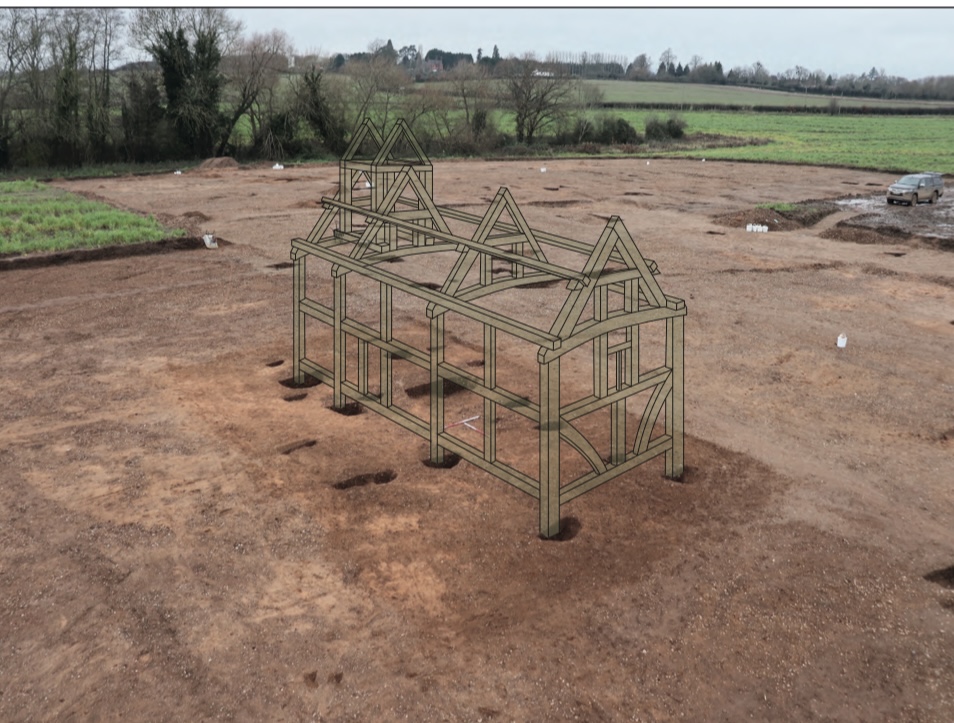
The excavation unearthed evidence of a timber-framed structure, constructed using earth-fast posts. The building was formed of twenty postholes, with eight primary posts creating four cross frames and three bays, measuring approximately 10.5 by 3 meters (34 by 10 feet). The bays varied in length: 3.8m, 4.05m, and 2.4m from east to west.
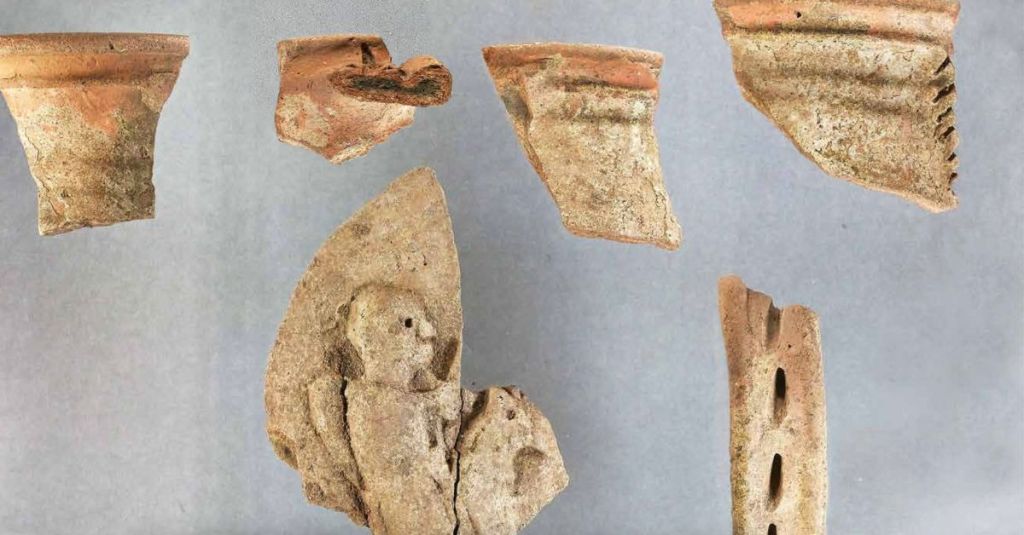
Among the finds were fragments of Roman pottery and a medieval “Horse and Knight” jug, dating from the 13th–14th century. A total of 23 sherds were recovered from the glazed Worcester sandy ware vessel, many of which fit together. Although no base sherds were found, the upper and middle sections were identified. The jug featured a thin, patchy green glaze, now largely decayed, applied over a white slip that extended over the rim and down to the shoulderon the interior surface. It had a complex collared rim, and while the spout was missing, similar Worcester pottery of the period is often associated with bridge-spouted forms.
These discoveries provide tantalizing clues about the Templars’ presence at Temple Laugherne, shedding light on a once-forgotten chapter of Worcestershire’s medieval history.
The report concludes:
The Knights Templar are known to have owned the estate from 1249, and it remained in their possession until 1311 when it was granted to the Knights Hospitaller. The chapel could have been constructed to display the patronage of the new owners, or it might have been the onset of the Black Death reaching Britain by the summer of 1348, that spurred on its construction. However, given the construction technique of the building, this later date seems unlikely. Other such small chapels are known, particularly in Warwickshire, where there are hints that the villagers got together and funded them, the chapel, therefore, being funded by the community and, where lasting for a short time span, undocumented, so that archaeology, and field-names then become the best evidence (Chris Dyer, pers comm). At Temple Laugherne these have fortunately coincided together.
Such a chapel would be an offshoot of the main parish church, in this case the church of St John, in the parish of St John in Bedwardine, part of Worcester. In England, around 4000 parochial chapels were built between the 12th and 17th centuries as subsidiary places of worship for the convenience of parishioners who lived at a distance from the main parish church (Historic England 2021). Beyond mere convenience, this would have allowed more time for the parishioners to work the estate fields.
To Read the report for yourself – please hit the following link here
 TheTemplars.Co.Uk