OCTOBER 2026
In June 1381, rebellion swept into London. Among the rebels’ most deliberate targets was the great Priory of St John at Clerkenwell, headquarters of the Knights Hospitaller in England. Its destruction was no random act of violence. At the centre of the story stood one man: Sir Robert Hales, Prior of the Hospitallers and Treasurer of England. To the rebels he had come to represent oppressive lordship, taxation and a government they believed had betrayed the young King Richard II.
England on the brink
The uprising traditionally known as the Peasants’ Revolt erupted in the summer of 1381, although the name can be misleading. The participants were not simply poor agricultural labourers. They included craftsmen, tradesmen, innkeepers, clergy, landholders, local officials, former soldiers and townspeople as well as villeins and rural labourers. Historian Helen Nicholson notes that some rebels were substantial landholders and others had held positions such as reeve, bailiff or juror. What united them was not social class alone, but a deep dissatisfaction with existing government, taxation and lordship.
The roots of the revolt stretched back several decades. The Black Death of 1348–49 had dramatically reduced England’s population and consequently increased the bargaining power of surviving workers. Labour was scarce and workers could demand higher wages or seek better employment elsewhere.
The response of government and landowners was to attempt to restrain this new freedom. The Ordinance of Labourers of 1349 and the Statute of Labourers of 1351 attempted to control wages, restrict the movement of workers and compel able-bodied people to accept work at rates based on those prevailing before the plague.
At the same time many rural communities remained subject to villeinage and customary obligations. Tenants could owe labour services, rents and other dues to their manorial lords. By the later fourteenth century these obligations increasingly clashed with a society in which labourers and tenants had become economically more mobile.
The surviving records of the revolt show how important these grievances were. Rebels repeatedly sought out and destroyed manorial court rolls, charters and legal documents recording rents, debts, services and obligations. Destroying the documents was intended to destroy, or at least make it much harder to enforce, the rights they recorded.
The poll tax that ignited the revolt
War made the situation still worse. England’s long conflict with France was consuming enormous quantities of money, while military campaigns had achieved disappointing results.
Three poll taxes were imposed in just four years, in 1377, 1379 and 1380–81. The third was particularly contentious. Parliament intended it to raise an average of one shilling — twelve pence — for every person over the age of fifteen, with wealthier inhabitants expected to contribute towards poorer members of their communities. Even with this redistribution, it represented an unprecedented burden for many households.
Collection proved difficult and widespread under-declaration followed. A second attempt to collect the outstanding money in the spring of 1381 caused enormous resentment. The National Archives describes this renewed collection as the immediate spark for the revolt.
Violence began in Essex at the end of May, when resistance to the tax collectors developed into open rebellion. The rising spread with extraordinary speed through Essex, Kent and eventually much of eastern and southern England.
Wat Tyler, John Ball and the rebel leadership
In Kent the most famous leader to emerge was Wat Tyler, although surprisingly little is known with certainty about his earlier life.
Another important figure was John Ball, a radical priest whose preaching attacked social inequality. He was released from imprisonment by the Kentish rebels and joined them on their advance towards London. At Blackheath he became associated with the famous question:
“When Adam delved and Eve span, who was then the gentleman?”
It encapsulated one of the most radical ideas circulating among the rebels: if all humanity descended from Adam and Eve, on what moral basis could one person be born the hereditary servant of another?
The mysterious Jack Straw also appears in accounts of the revolt, although historians remain uncertain whether he was a separate individual, an alias, or a figure created or confused by later chroniclers.
For the story of Clerkenwell, however, another name deserves far greater prominence:
Thomas Farndon, or Farringdon.
He was a Londoner associated with the Essex rebels and appears to have played a particularly important part in the attacks upon Hospitaller property. Professor Helen Nicholson’s study of the revolt identifies Farndon as the leader of the armed band that attacked the Priory at Clerkenwell.
The rebels converge on London
By 12 June 1381, the Kentish rebels had reached Blackheath, immediately south-east of London. Other rebel forces were approaching from Essex.
The rebels repeatedly insisted that they were loyal to the fourteen-year-old King Richard II. Their argument was that the king himself was being misled by corrupt or treacherous advisers. Their objective, they claimed, was therefore not to depose Richard but to remove the men surrounding him.
Among those men were:
Simon Sudbury, Archbishop of Canterbury and Chancellor of England;
Robert Hales, Treasurer of England and Prior of the Knights Hospitaller;
and a number of senior judicial and financial officials.
The king initially attempted to communicate with the rebels by boat at Rotherhithe, but negotiations failed. On 13 June, rebels were allowed across London Bridge and entered the city. Londoners joined them, transforming what had begun as a regional rebellion into an enormous urban uprising.
Prisons were opened, government and legal records were destroyed, and properties belonging to people identified with the royal administration were attacked.
Among the principal targets was the magnificent Savoy Palace, residence of Richard II’s uncle John of Gaunt. It was deliberately destroyed.
But the rebels were not finished.
Their attention now turned towards the Knights Hospitaller.
The road to Clerkenwell
The precise movements of every group in London on 13 June cannot now be reconstructed with certainty. Different bands were moving simultaneously, Londoners were joining the uprising, and even contemporary chroniclers struggled to create a completely coherent account.
Nevertheless, the evidence reveals a recognisable trail of destruction.
The rebels attacked the Fleet Prison, the legal complex at the Temple, the Savoy Palace, and then moved northwards beyond Smithfield towards Clerkenwell. At the Temple they carried legal books, rolls and records into the street and burned them. The destruction of written evidence of law, property and obligation was a recurring feature of the revolt.
Clerkenwell was not simply another wealthy religious house.
It was the headquarters of the Order of the Hospital of St John of Jerusalem — the Knights Hospitaller — in England.
The Order had established its principal English house there during the twelfth century. From Clerkenwell its English estates, commanderies, churches and properties were administered, and income was gathered to support the Order’s activities overseas.
By 1381 the priory occupied an extensive site outside the old walls of London.
And its Prior was Sir Robert Hales.
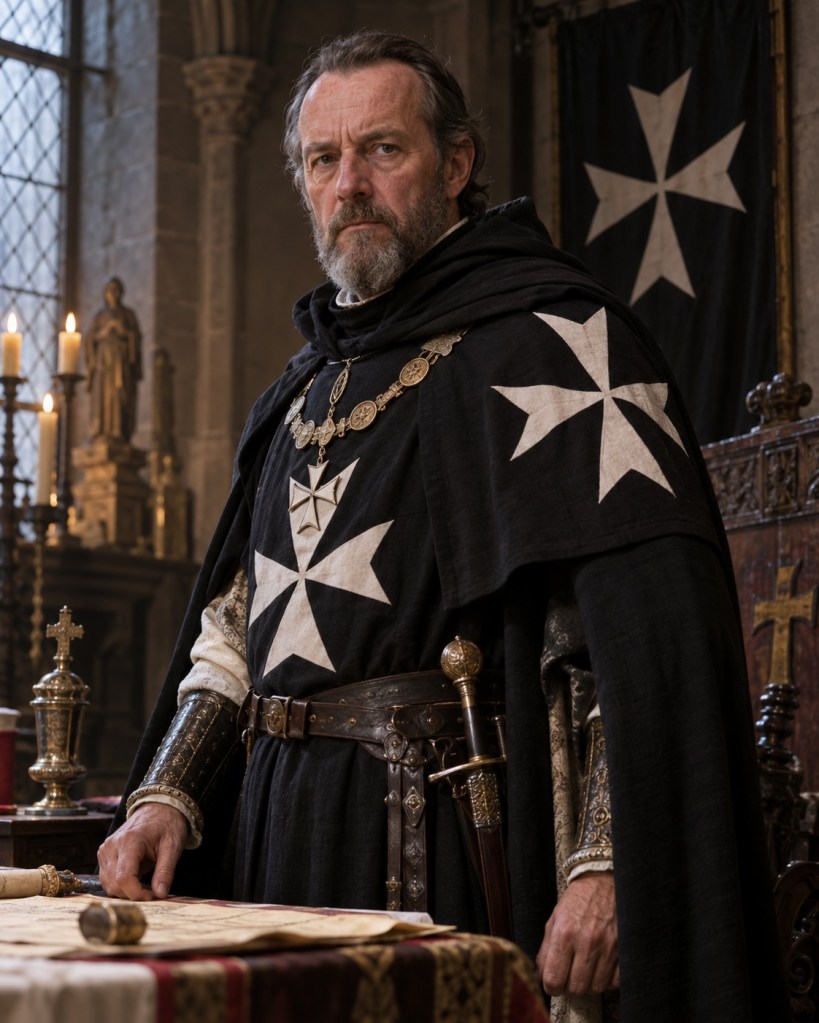
Who was Sir Robert Hales?
Robert Hales was much more than a religious administrator.
He had enjoyed a distinguished career within the Order of St John. By 1358 he was associated with Hospitaller commanderies including Eagle, Temple Bruer and Sutton-at-Hone, and later held Sandford, Slebech and other estates.
In 1365 he served in the eastern Mediterranean and participated in King Peter I of Cyprus’s expedition against Alexandria. His service was sufficiently valued for the Hospitaller Grand Master to acknowledge his contribution afterwards.
By 1372 Hales had become Prior of England, making him head of the Hospitallers’ English organisation.
His career increasingly crossed from the religious into the political world. He became Admiral of the West, served on councils governing England during the minority of Richard II and attended Parliament.
Finally, on 1 February 1381, he became Treasurer of England.
The timing could scarcely have been worse.
The government was attempting to collect the outstanding poll tax, the treasury was desperately short of money and resentment of royal taxation was reaching breaking point.
It is important, however, to correct a common misconception.
Robert Hales did not devise the third poll tax.
Parliament had approved it in late 1380, before Hales became Treasurer. But by accepting the treasury in February 1381, Hales became the public face of royal finance during the increasingly aggressive attempt to collect it.
In the eyes of many rebels there was little distinction between the policy and the man administering the government responsible for it.
Why was Robert Hales personally hated?
The evidence suggests something deeper than hostility towards his office.
The chronicler Thomas Walsingham described Hales as an energetic and formidable knight but remarked that his appointment as Treasurer would not please the people of the realm.
His military reputation may actually have increased fear of him. After the revolt, evidence was presented that rumours had circulated in Essex claiming Hales intended to arrive with one hundred men-at-arms and kill local inhabitants. Whether the rumour had any basis in fact is far less important than the fact that people apparently believed it.
Even more remarkably, some of Hales’s own servants, including one of his grooms, were implicated in attacks upon Hospitaller property during the uprising. Nicholson observes that this hardly suggests that Hales was universally regarded as a popular master.
And there was another, intensely personal grievance.
Thomas Farndon’s accusation
Thomas Farndon, the man closely associated with the attack on Clerkenwell, claimed that Robert Hales had wrongfully deprived him of property or inheritance.
On 14 June, when Richard II met rebels at Mile End, Farndon confronted the king and denounced Hales as a “false traitor”, demanding justice for property that he alleged the Prior had fraudulently taken from him.
Exactly what lay behind the dispute is uncertain, but it demonstrates that the attack upon the Hospitallers was not motivated simply by abstract opposition to taxation.
For at least some of those leading the assault, there were personal grievances against the Prior himself.
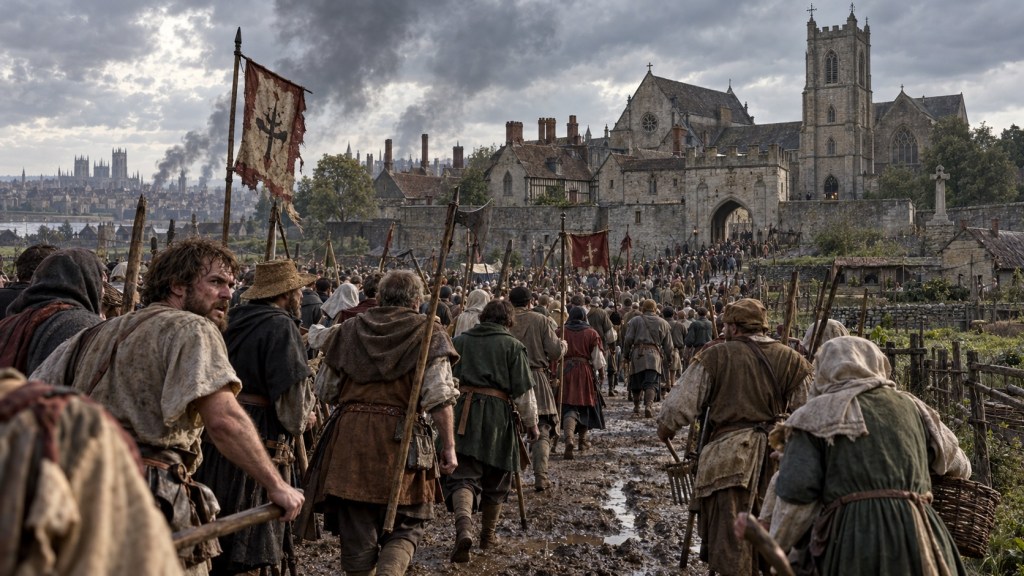
The attack on Clerkenwell
On the evening of Thursday 13 June 1381, the rebellion reached the Hospitaller headquarters.
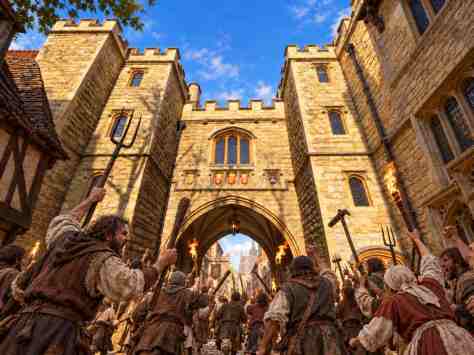
A large armed group led by Thomas Farndon broke into the Priory of St John.
What followed was devastating.
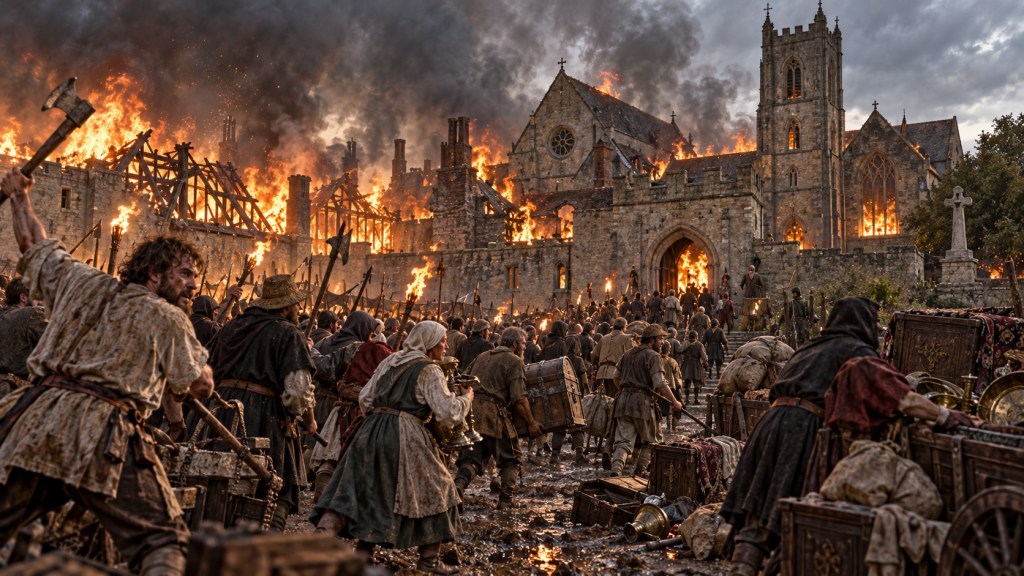
Buildings within the priory and houses around it were deliberately set alight. Goods, money and documents were taken. Records were destroyed. People discovered within the complex were killed.
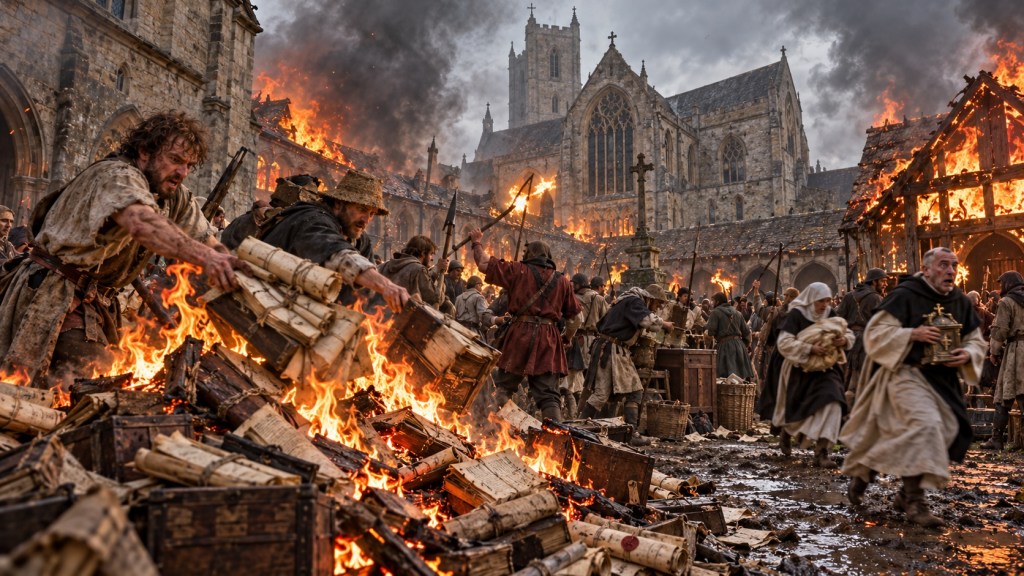
Legal proceedings after the revolt give unusually vivid evidence of what happened. One indictment records that Robert Gardiner of Middlesex went to Clerkenwell with the rebels and beheaded seven men there; he was also accused of stealing a valuable chalice.
The assault therefore involved far more than simply setting fire to an empty building.
It combined arson, murder, looting and the deliberate destruction of documentary records.
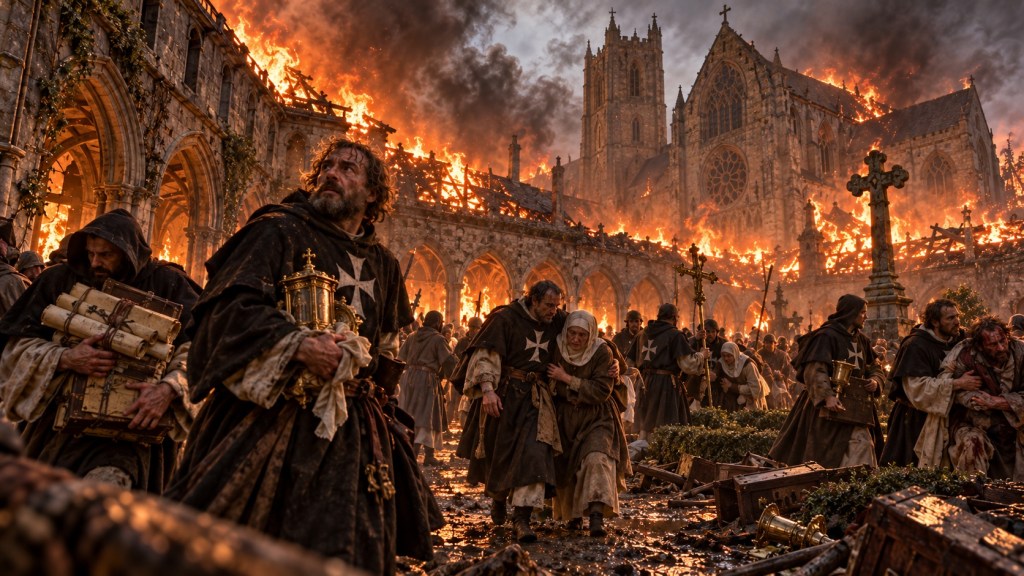
Later London tradition claimed that the priory burned for as long as seven days. That detail comes through later chroniclers and should be treated more cautiously than the contemporary legal evidence, but there is no doubt that the destruction was substantial. Historic England describes the medieval priory as having been effectively devastated during the rising, and archaeological evidence on the site includes traces of late-fourteenth-century fire damage.
Yet the person the rebels most wanted was not there.
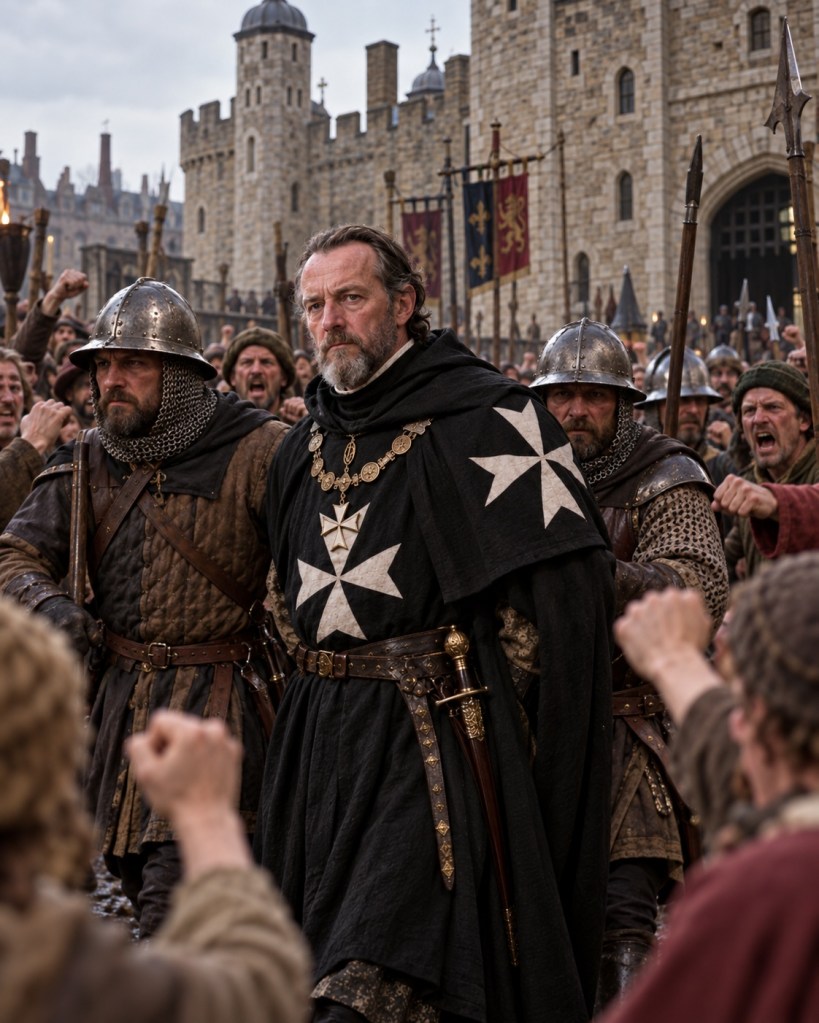
Robert Hales had taken refuge with the king in the Tower of London.
The destruction continues at Highbury
Clerkenwell was not the only Hospitaller property attacked.
On 14 June, rebels including men who had participated in the Clerkenwell attack moved against Highbury Manor, another property belonging to the Prior.
The manor was burned and looted, and rolls, records, goods and possessions were carried away. Sources associate Jack Straw with this second attack.
The pattern is unmistakable.
Cressing Temple.
The Temple in London.
Clerkenwell Priory.
Highbury Manor.
These were not simply convenient buildings encountered by an uncontrolled crowd. Hospitaller property was being repeatedly identified and attacked because the Order represented landlordship, documentation, financial administration — and Robert Hales himself.
Robert Hales in the Tower
While his priory burned, Hales remained with Richard II and other senior officials inside the Tower.
On the morning of 14 June, Richard rode out to meet a large body of rebels at Mile End.
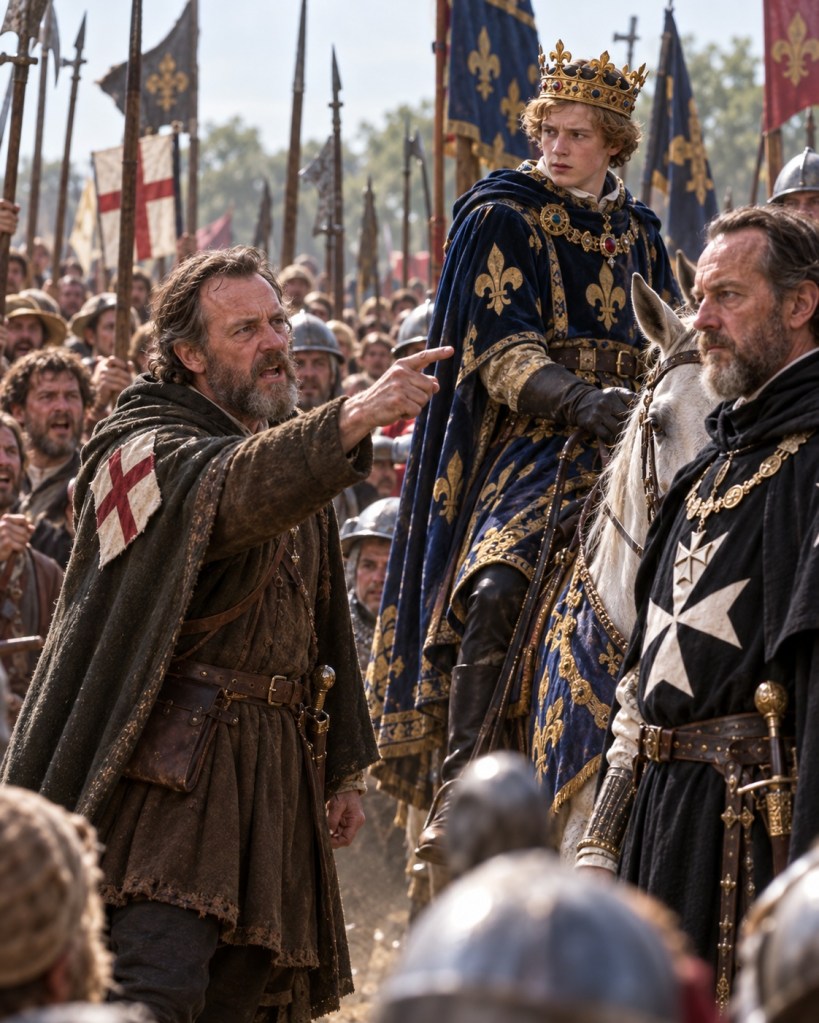
The king agreed to major demands, including freedom from villeinage, and authorised the production of charters granting freedom to the rebels.
But not everyone had followed Richard to Mile End.
A separate group entered the Tower.
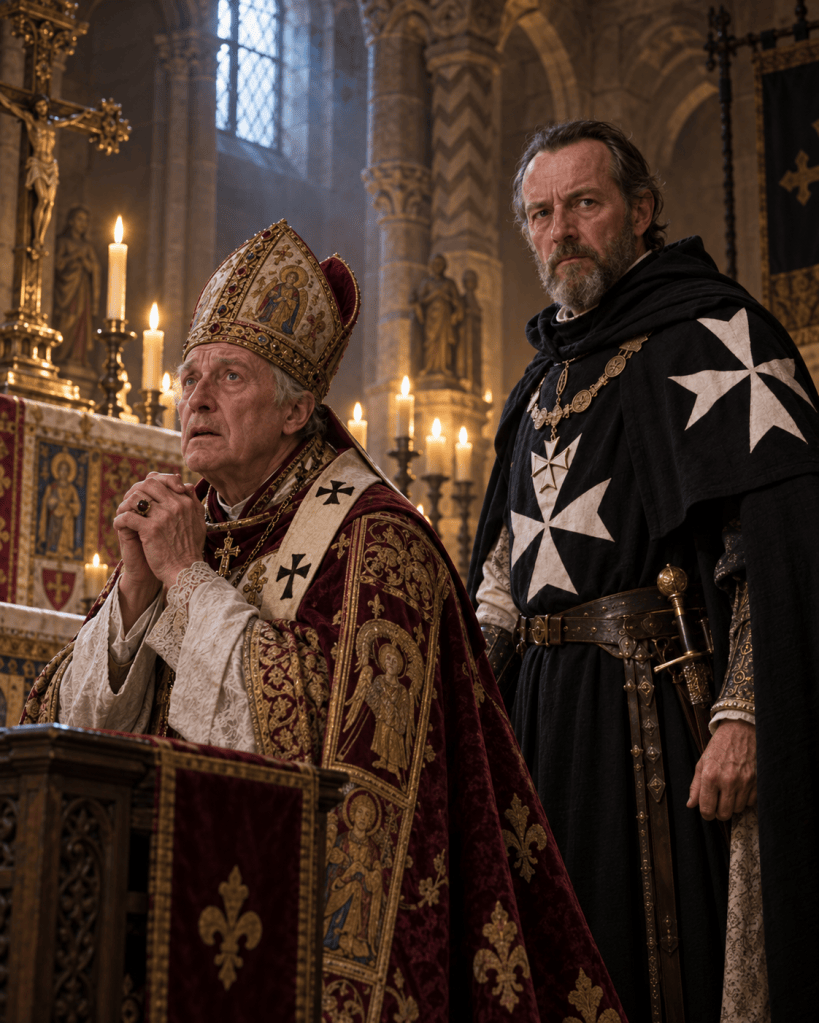
There they found Simon Sudbury, Archbishop of Canterbury and Chancellor; Robert Hales, Treasurer and Prior of the Hospitallers; and other men whom the rebels regarded as enemies.
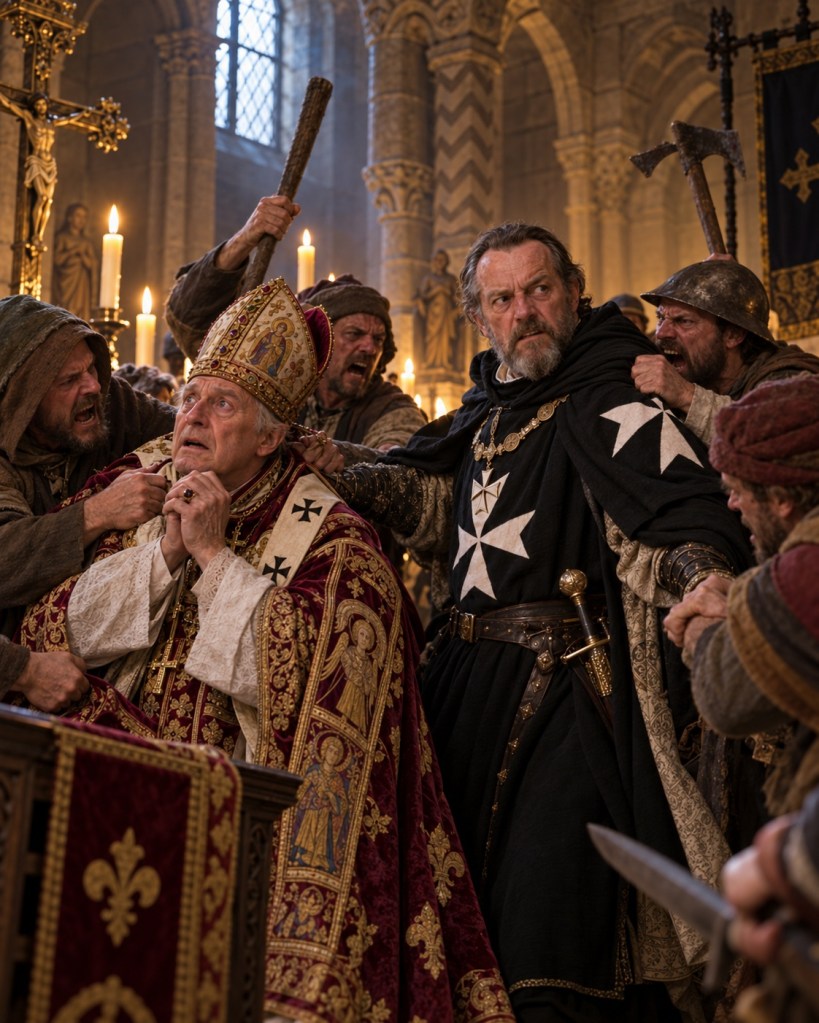
Accounts place Sudbury and Hales in or around St John’s Chapel within the White Tower, preparing themselves for the possibility of death.
The rebels seized them.
Hales — the crusading Hospitaller knight, Prior of England, former admiral and Treasurer of the kingdom — was dragged from the protection of the Tower.
He was taken onto Tower Hill.
There, on 14 June 1381, Robert Hales was beheaded.
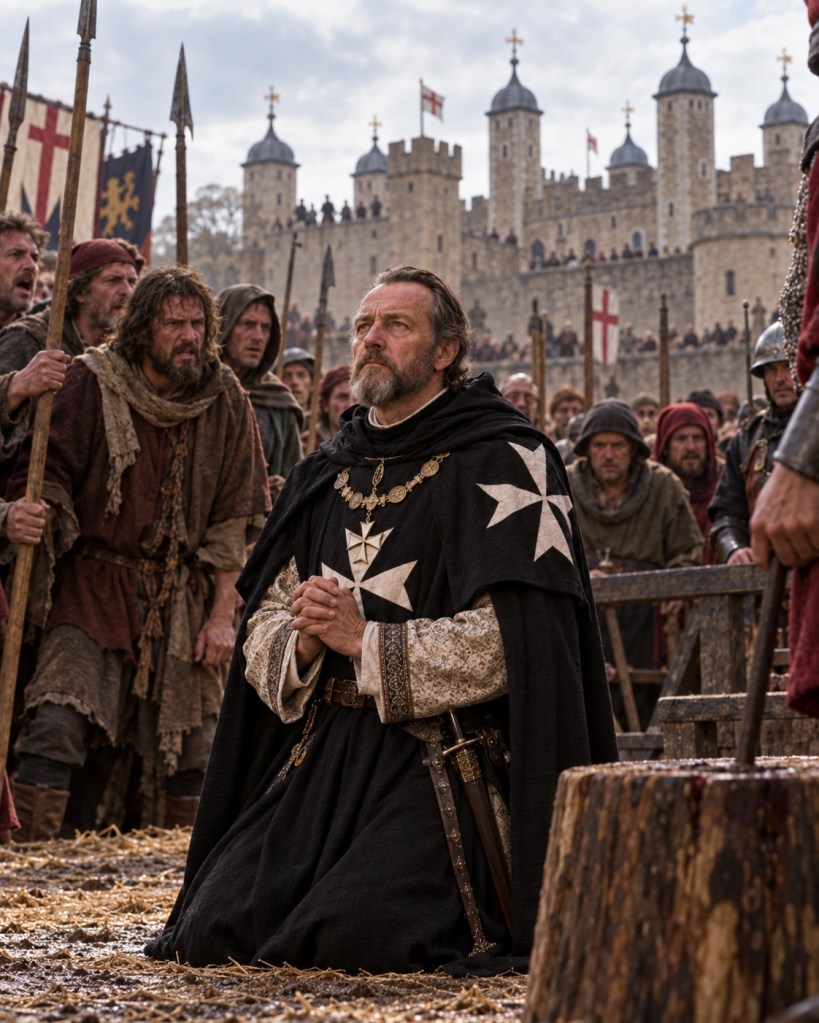
Sudbury and royal sergeant John Legge were also executed. Some accounts include the Franciscan William Appleton among the victims. The severed heads were subsequently carried through London and displayed on London Bridge.
For the rebels, Hales’s execution was not presented as the murder of a servant of the king. They believed that they were removing a traitor who had corrupted the government of their king.
That distinction is essential to understanding the revolt.
Many of the rebels still professed loyalty to Richard II.
Their fury was directed instead at the system of officials, landlords, lawyers and councillors whom they believed stood between the king and his “true commons”.
The end of the revolt in London
The following day, 15 June, Richard met the remaining rebels at Smithfield.
There Wat Tyler entered into negotiations with the king. A confrontation followed between Tyler and William Walworth, Mayor of London, and Tyler was mortally wounded.
For a few dangerous moments thousands of armed rebels faced the royal party.
The young Richard then rode forward and asserted himself as their leader, persuading the crowd to follow him towards the open ground at Clerkenwell Fields while loyal forces were assembled.
Without Tyler, the London rebellion rapidly disintegrated.
Elsewhere uprisings continued, particularly in East Anglia, but royal authority was gradually restored.
The promises made by Richard were revoked.
Villeinage was not abolished.
Rebel leaders were hunted down and many were executed, although substantial numbers of participants subsequently received pardons.
John Ball was captured and executed in July 1381.
What happened to Clerkenwell after 1381?
The attack did not destroy the Knights Hospitaller in England.
The Order appointed a new leadership. John Radington became Prior of England later in 1381 and the enormous task of restoring Clerkenwell began. Nicholson records that Radington was formally appointed by the Grand Master and convent on 18 November 1381.
The site was rebuilt and Clerkenwell again became one of the Order’s most important centres in western Europe. Historic England dates the principal rebuilding to around 1400.
Over the following century the priory continued to develop.
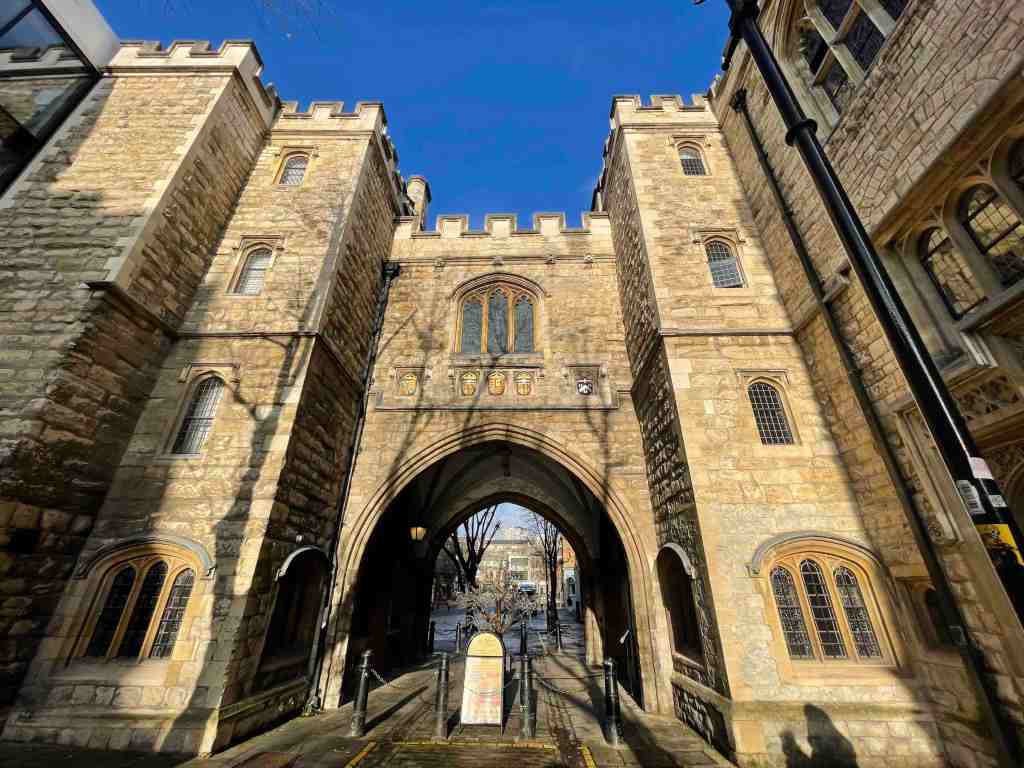
The impressive St John’s Gate which survives today was not the gateway through which the rebels burst in 1381. The present structure was constructed much later, in 1504, under Prior Sir Thomas Docwra.
Beneath the present Priory Church, however, sections of the twelfth-century crypt preserve something of the medieval Hospitaller complex which existed before the revolt.
Clerkenwell remained the English headquarters of the Order until Henry VIII suppressed the Hospitallers in England in 1540.
The legacy of Clerkenwell and 1381
The assault on Clerkenwell is sometimes described simply as another episode of destruction during the Peasants’ Revolt.
It deserves to be understood as something considerably more significant.
The Priory embodied many of the institutions against which the rebels were protesting.
It was a great landowner, capable of demanding traditional services from its tenants.
It was a religious corporation possessing enormous wealth and property.
Its buildings were connected with government finance and record-keeping.
And standing at its head was Robert Hales, simultaneously Prior of the Knights Hospitaller and Treasurer of England.
Hales therefore occupied the point where several of the rebels’ grievances met: lordship, taxation, government, military authority and personal disputes over property.
This helps explain why the violence against the Hospitallers was so focused.
Their properties at Cressing, the Temple, Clerkenwell and Highbury were attacked; their documents were destroyed; their headquarters was burned; and finally their Prior was hunted down and executed.
Yet 1381 was not the end of Clerkenwell.
The priory rose again.
The Hospitallers remained there for another century and a half, and the Order’s association with the site ultimately survived even the Reformation.
Today St John’s Gate and the surviving medieval crypt stand on ground where, in June 1381, one of the most dramatic episodes in the history of the Knights Hospitaller in England unfolded.
For one extraordinary summer evening the English headquarters of the Order became the focus of a rebellion that challenged medieval lordship itself — and its Prior, Sir Robert Hales, paid for his association with that system with his life.
Learn More about the Knights Hospitallers in the UK on our main website by clicking here
Check Out out Knights Gift Store for your replica Knights Templar, Hospitaller and Order of St Lazarus Armour, weapons clothes & gifts by clicking here

