OCTOBER 2026
Just north of the Lincolnshire village of South Witham, beside the River Witham, lies the site of one of the most archaeologically important Knights Templar preceptories in England.
Very little is visible above ground today, but excavations undertaken between 1965 and 1967 revealed an extensive medieval complex of halls, chapel, kitchens, barns, workshops, a forge, watermill and other buildings. South Witham remains exceptional because it is the most extensively excavated Templar preceptory site in England, providing a rare picture of how one of the Order’s rural estates actually functioned.
The foundation of South Witham
South Witham was established during the early years of the Templars’ expansion in England. Historic England dates the foundation to before 1164, while the detailed archaeological study of the site concluded that the Templars acquired their land at South Witham sometime between 1137 and 1185.
Older accounts identify Margaret de Percy and Hubert de Rie as important benefactors and sometimes describe them as the founders of South Witham. However, the surviving evidence does not allow the original estate to be reconstructed as a single securely dated foundation gift. It is therefore safer to regard Percy and de Rie as important early benefactors associated with the establishment rather than state that one particular charter founded the preceptory.
The earliest establishment was relatively modest. Archaeology revealed an aisled hall, two smaller associated buildings and a watermill on the River Witham. Only during the early 13th century did South Witham develop into the substantial religious and agricultural complex that we would recognise as a fully developed Templar preceptory.
What did the Templars own at South Witham?
South Witham was principally an agricultural estate whose purpose was to generate food, rents and income for the Order.
The Templars possessed the preceptory and its demesne lands together with arable and pastoral property, a watermill, fishponds and associated water-management features. They also held a moiety — effectively half — of the rights and revenues of the parish church of South Witham. This ecclesiastical interest remained attached to the estate after the suppression of the Templars.
The scale of the inherited estate can be seen in the Hospitaller survey of 1338. By then the former Templar holding was recorded as comprising a messuage, eight carucates of land and a moiety of the church of South Witham. The site itself had already fallen out of occupation, but the agricultural estate remained valuable.
By the beginning of the 14th century South Witham was no longer operating independently. Its estate had been absorbed administratively into the much larger Templar preceptory of Temple Bruer.
The buildings of the preceptory
The excavations revealed how dramatically South Witham expanded during the 13th century.
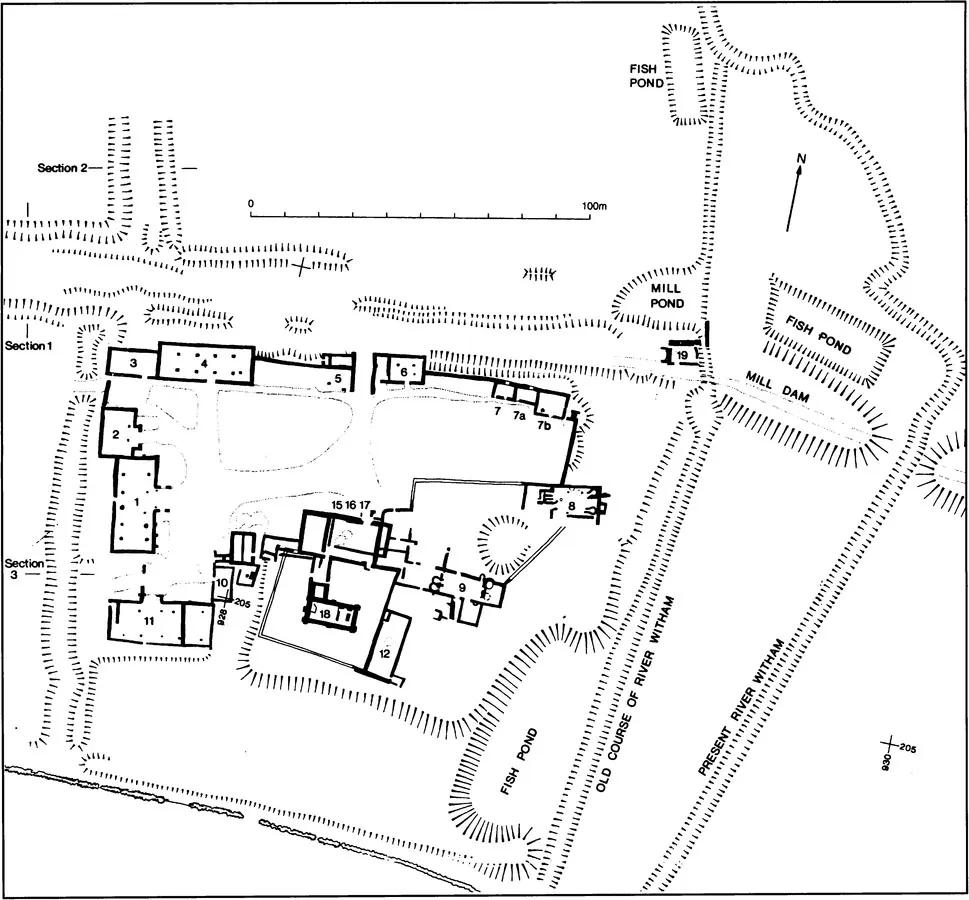
The developed preceptory was arranged around a large central court. The principal domestic and religious buildings occupied the south-eastern part of the complex, while agricultural and industrial buildings were concentrated principally to the north and west.
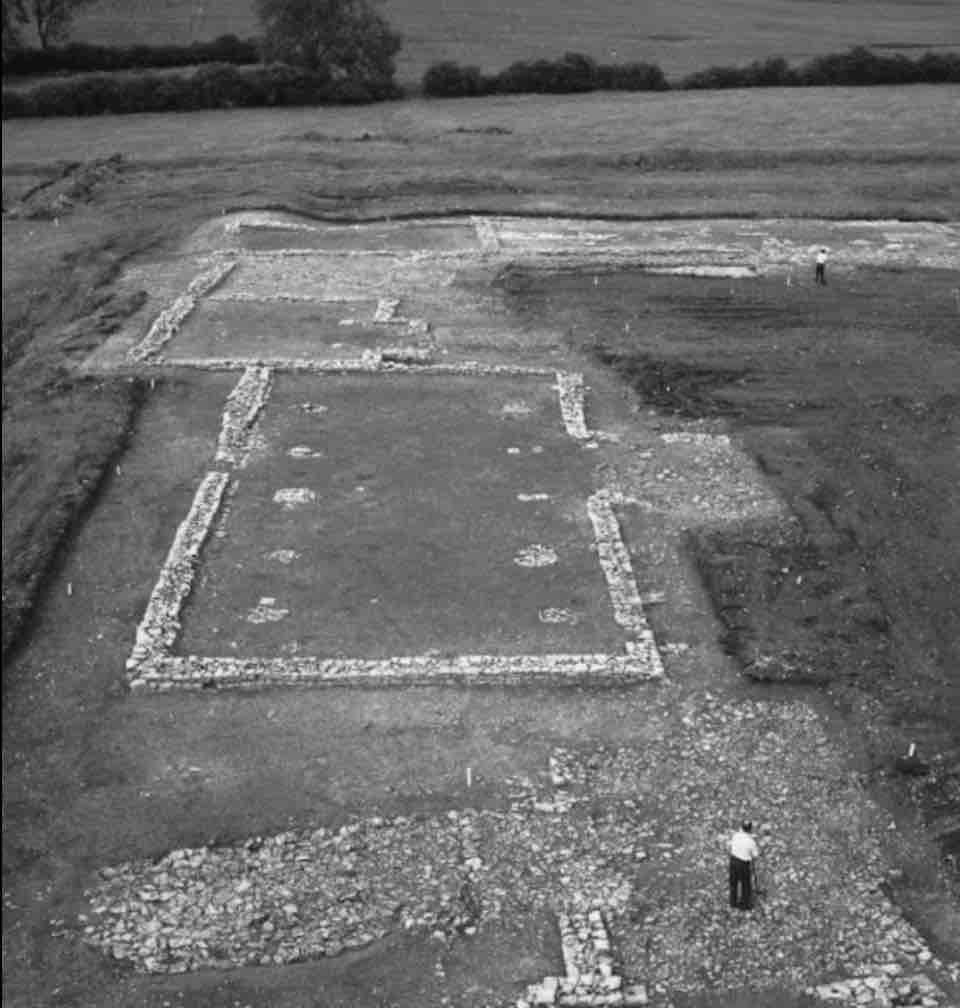
Archaeology identified a Great Hall and lesser hall; stone chapel; kitchen range; dairy or brewhouse; barns and granary; animal buildings including stables and shelters; gatehouse and probable accommodation for visitors; workshops and smithy; ovens and kilns; watermill; fishponds; and enclosed yards and gardens. Altogether the foundations of around eighteen structures were identified.
The chapel appears to have been constructed during the early 13th century, probably around 1210–1220. Unlike the famous circular Templar churches at London and Temple Bruer, South Witham’s chapel was rectangular. Painted medieval plaster and burials were discovered during the excavation.
The industrial area provides particularly valuable evidence of everyday life. Furnaces and other remains indicate iron and lead working, tile manufacture and corn drying, while the royal inventory made after the arrest of the Templars records anvils, hammers and tongs in the South Witham forge.
This was therefore not simply a residence for knights. It was a busy medieval farm, administrative centre, religious house and workshop complex.
Who lived and worked at South Witham?
The archaeological layout suggests that during the 13th century South Witham accommodated a preceptor and a small community of Templar brethren. The Great Hall and chapel appear to have provided spaces associated with the brothers, while the lesser hall may have been intended for the lay workforce.
Unfortunately, surviving records have not yet provided us with a reliable list of named Templar brothers who can be shown to have been resident specifically at South Witham.
This becomes particularly significant in 1308. By the time Edward II ordered the arrest of the English Templars on 10 January 1308, South Witham had already been absorbed into the administration of Temple Bruer. The excavation report suggests that there may have been no Templar brethren permanently resident at South Witham for some time before the arrests.
The lay workforce, however, is much clearer.
Contemporary accounts indicate that South Witham was being maintained by eight famuli or permanent farm servants, twelve ploughmen, a bailiff and three shepherds, whose costs were associated with the neighbouring Temple Bruer estate. These men demonstrate just how labour-intensive a Templar agricultural estate could be even after the resident religious community had apparently disappeared.
The 1308 accounts also name William de Crescy of Claypole, to whom rent was being paid for arable land and tenancies associated with the South Witham estate. They additionally record the loss of rent from a Stamford messuage held by William Cobbler, demonstrating that the South Witham administration included property beyond the immediate preceptory enclosure.
The end of the Templars
Following the arrests of 1308, South Witham was administered by the Crown. Accounts continued to be produced for the estate until 1313, but occupation rapidly declined.
The Knights Templar were formally suppressed in 1312. By 1324 South Witham was completely deserted, and when the former Templar properties finally came into the hands of the Knights Hospitaller, they did not re-establish a commandery here. The estate was eventually incorporated into their neighbouring administration at Temple Bruer.
By 1338 the former preceptory itself was described as a ruined or destroyed messuage, even though its lands, church revenues and agricultural value remained.
What remains today?
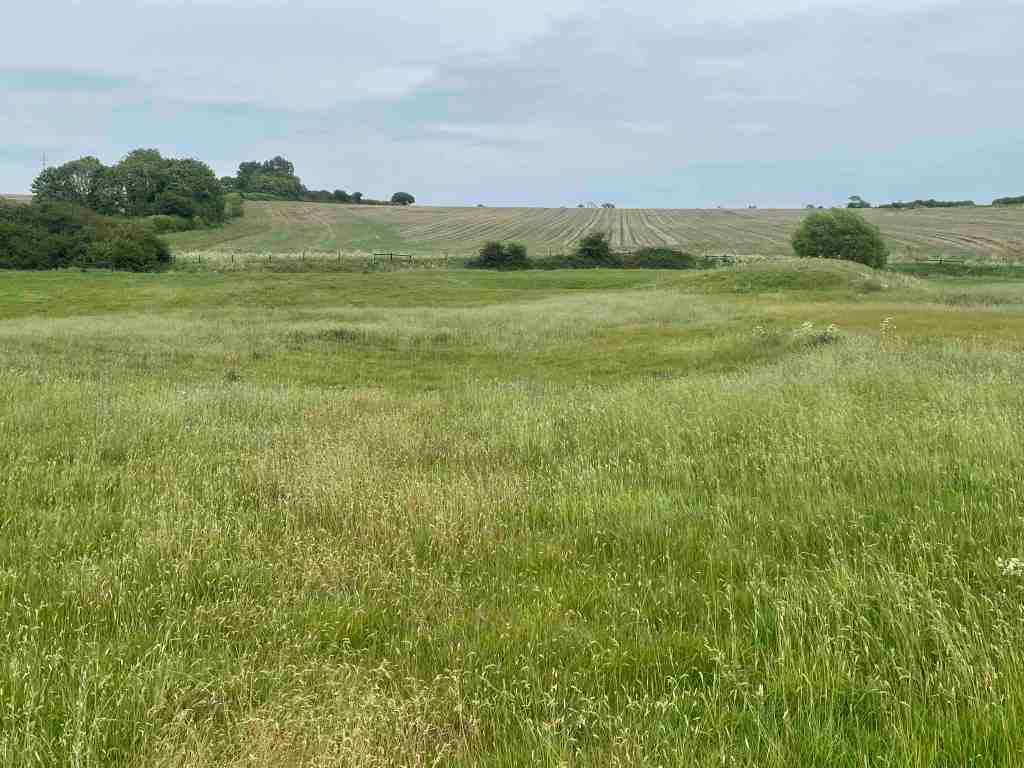
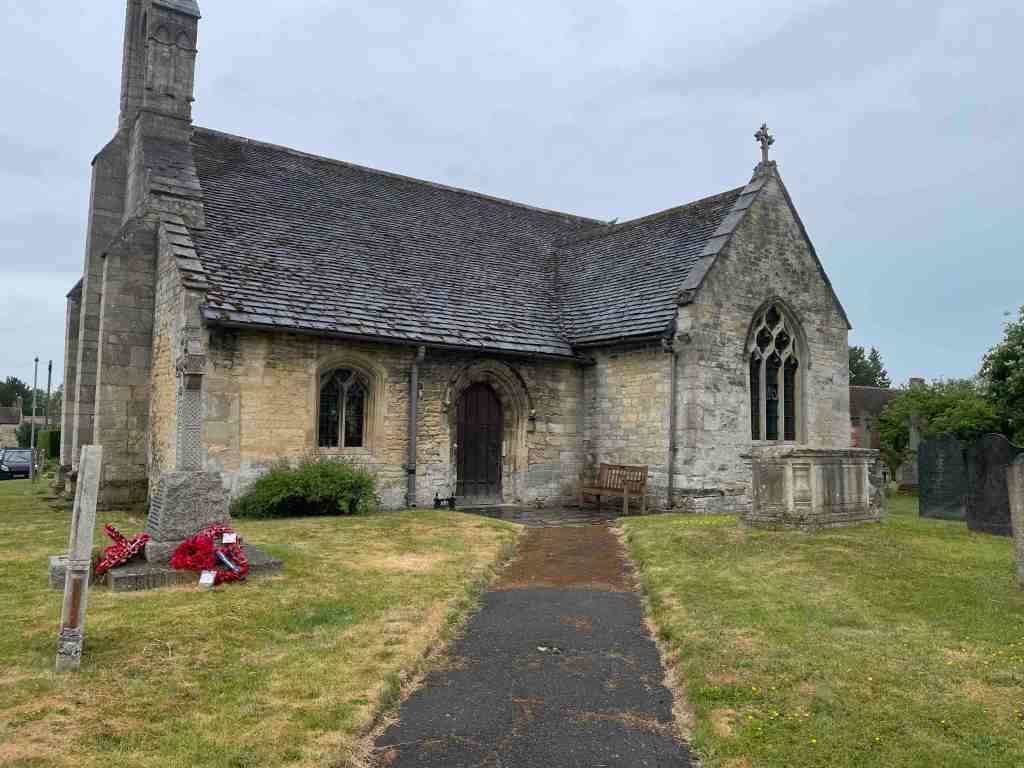
Today the former preceptory lies beneath pasture at Temple Hill, immediately west of the River Witham.
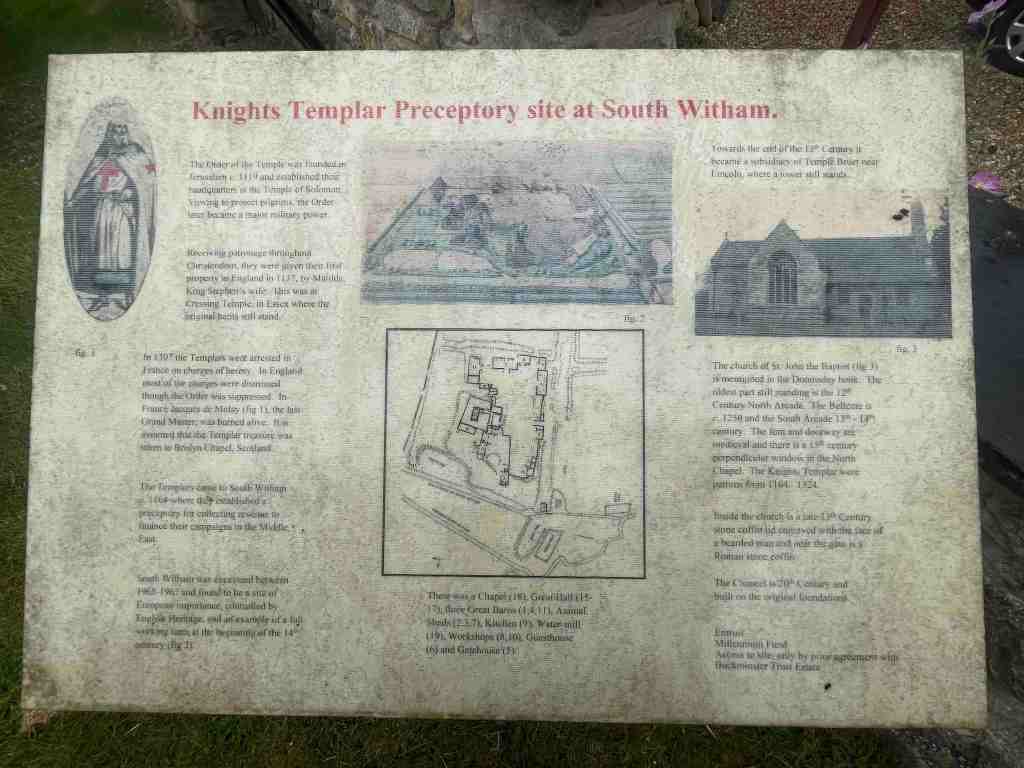
There are no standing Templar buildings, but the site survives remarkably well below ground and as a series of low earthworks. The remains include the buried foundations of the preceptory buildings, the watermill, fishponds and water-management system, sections of the medieval trackway and elements of the surrounding field system.
More than half of the preceptory was excavated between 1965 and 1967, but the surviving archaeological remains were largely left in place. Because the land has remained predominantly under pasture, later disturbance has been relatively slight.
The site is now a Scheduled Monument, recognised nationally for its importance. Its value lies not in a surviving tower or chapel above ground, but in the extraordinary archaeological evidence preserved beneath what today appears to be an ordinary Lincolnshire field.
South Witham therefore offers something unusual among England’s Templar sites: an almost complete archaeological footprint of the type of working rural preceptory whose farms, mills, workshops and labourers helped finance the wider mission of the Knights Templar.
Learn More about the Knights Hospitallers in the UK on our main website by clicking here
Check Out out Knights Gift Store for your replica Knights Templar, Hospitaller and Order of St Lazarus Armour, weapons clothes & gifts by clicking here

